Puerto Rico has three bioluminescent bays. No other place on earth has more, and
all three are within a few hours of San Juan — which sounds like an embarrassment
of riches until you try to pick one, discover the tours all look roughly the same
on a booking page, and realise nobody has told you the thing that actually
decides whether you see anything at all.
That thing is the moon.
The moon decides your night, not the operator
Bioluminescence in these bays comes from Pyrodinium bahamense, a single-celled
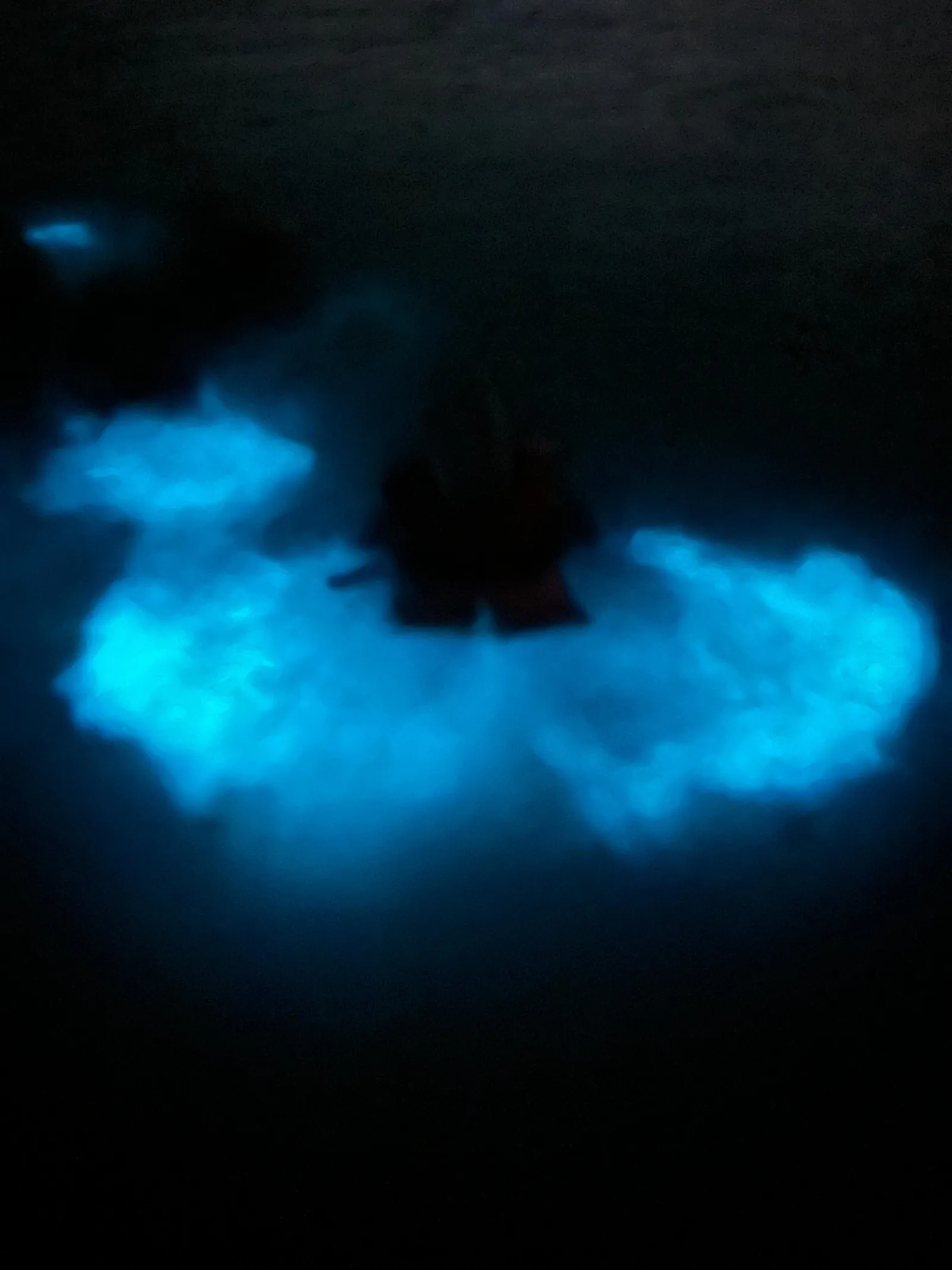
dinoflagellate whose name translates as whirling fire. Disturb the water and it
flashes blue-green (why the water glows). Mosquito Bay on Vieques holds as many as 700,000 of them in a
gallon, which is why Guinness World Records named it the brightest bioluminescent
bay in the world back in 2006.
None of that helps you on a night with a full moon overhead. The flashes are
faint, and they are competing with whatever else is lighting the sky. Moonlight
wins. This is why two people can take the same tour, from the same operator, two
weeks apart, and come home with completely different reports — and why the
reviews on any bio bay listing read like two different products stacked on top of
each other.
So the first decision is not which bay or which operator. It is the date, and our
best-time guide lists
every new moon and full-moon closure through 2027. Book in
the week around a new moon and you have given yourself the best odds
anyone can give you. Book three days either side of a full moon and you are
paying for a mangrove paddle under moonlight, which is genuinely lovely and is
not what you came for.
Rain and sargassum matter too, in smaller ways. A recent bloom of seaweed in a
channel can smother the display for a week. Heavy rain dilutes the surface layer.
Neither is predictable far enough ahead to plan around, which is the honest
answer to why no operator will promise you a glow.
Three bays, three different trips
The bays are not interchangeable, and the differences are bigger than the
marketing suggests.
Laguna Grande, in Fajardo, is the one most visitors end up at, and for good
reason: it is about an hour east of San Juan, several operators run hotel pickup
(our guide to bio bay tours from San Juan
compares them), and you can do it on a weeknight without rearranging your trip. You reach it by
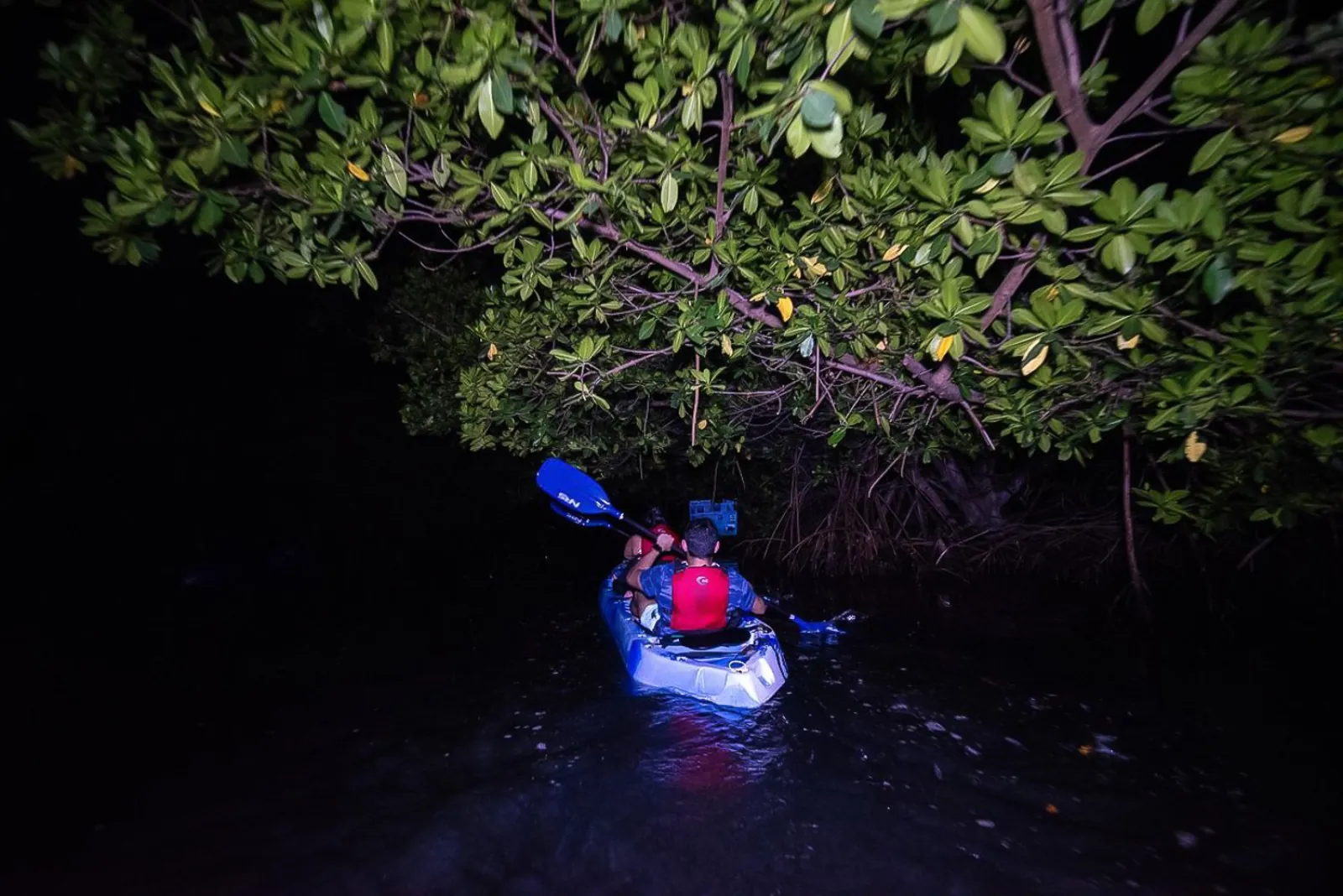
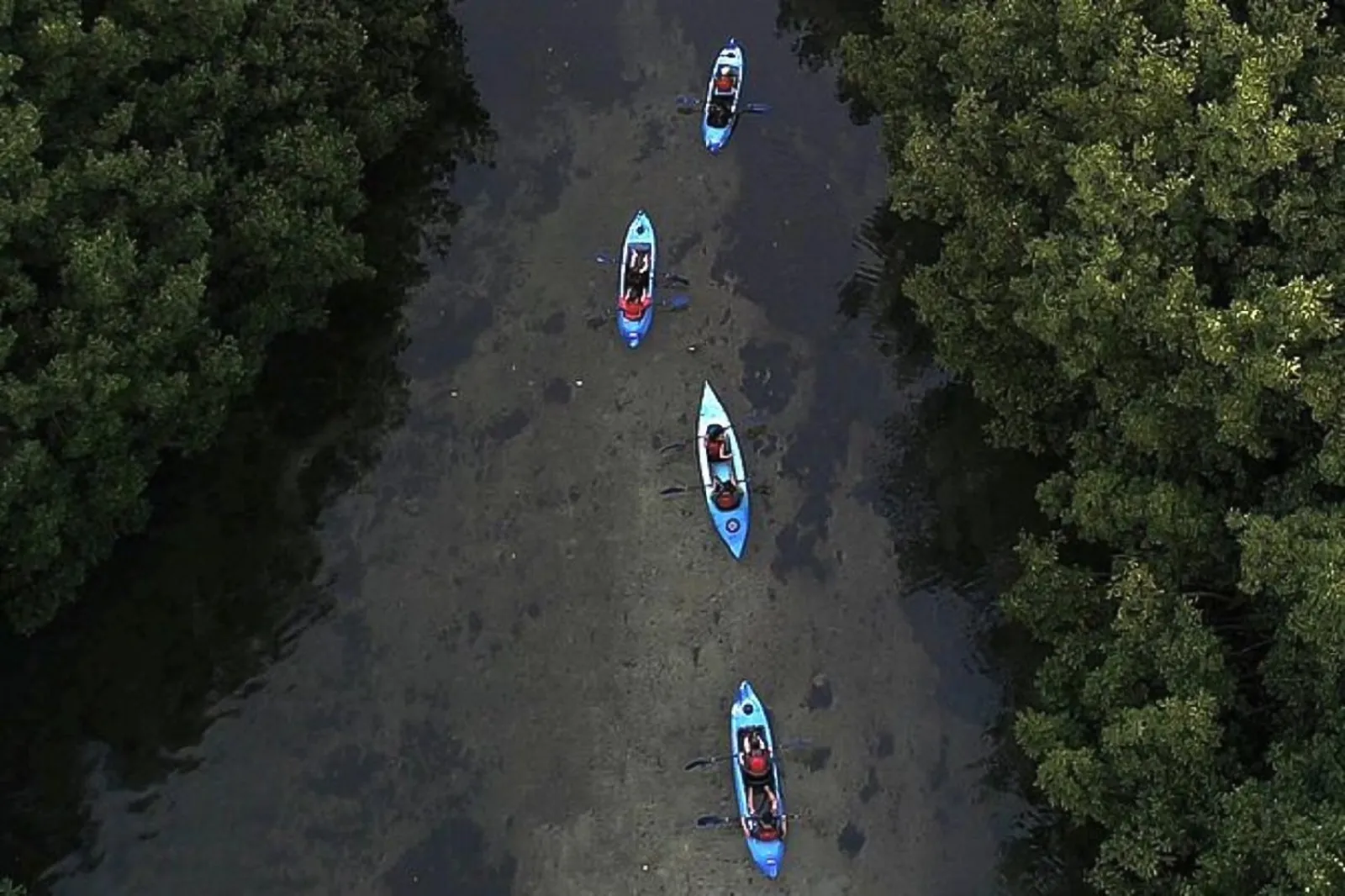
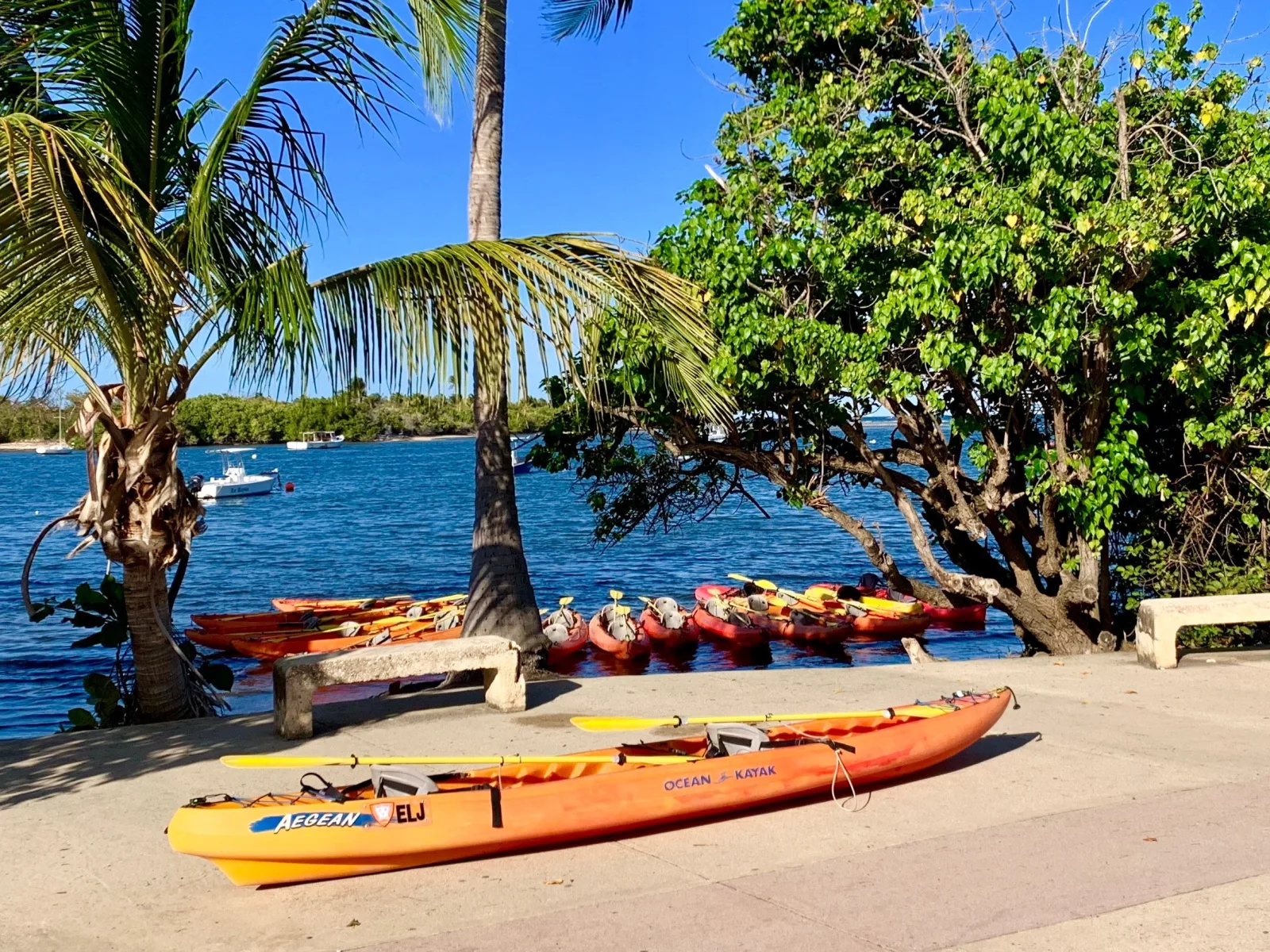
kayak, through a red mangrove channel that takes 25 to 30 minutes each way. That
channel is a real part of the experience — a tunnel of overhanging branches with
night herons complaining on both sides — and it is the reason Fajardo tours run
two to three hours while the Vieques ones run forty minutes. Our
Laguna Grande guide covers the operators,
the drive and the ride home. If you have a whole day, it pairs with El Yunque, and our
ranking of the best day trips from San Juan
puts that combo against the catamarans, Culebra and the rest.
Mosquito Bay, on Vieques, is the brightest, and it is not close. If you want
the version of this that lives up to the photographs, this is it. The cost is
logistical: Vieques is an island off the east coast reached by ferry or a short
flight, the last ferry back leaves too early to catch after an evening tour, and
at least one operator will not take your booking without proof you have a bed for
the night. Treat Mosquito Bay as a two-day plan and it is wonderful. Treat it as
a day trip and it will go wrong. Our guide to
getting to Vieques compares the ferry and the
flights, and our Mosquito Bay guide covers the
operators, the full-moon closures and where to stay.
La Parguera, in Lajas, is the dimmest of the three and the furthest from San
Juan at about two hours. It is also the only one where you can still get into the
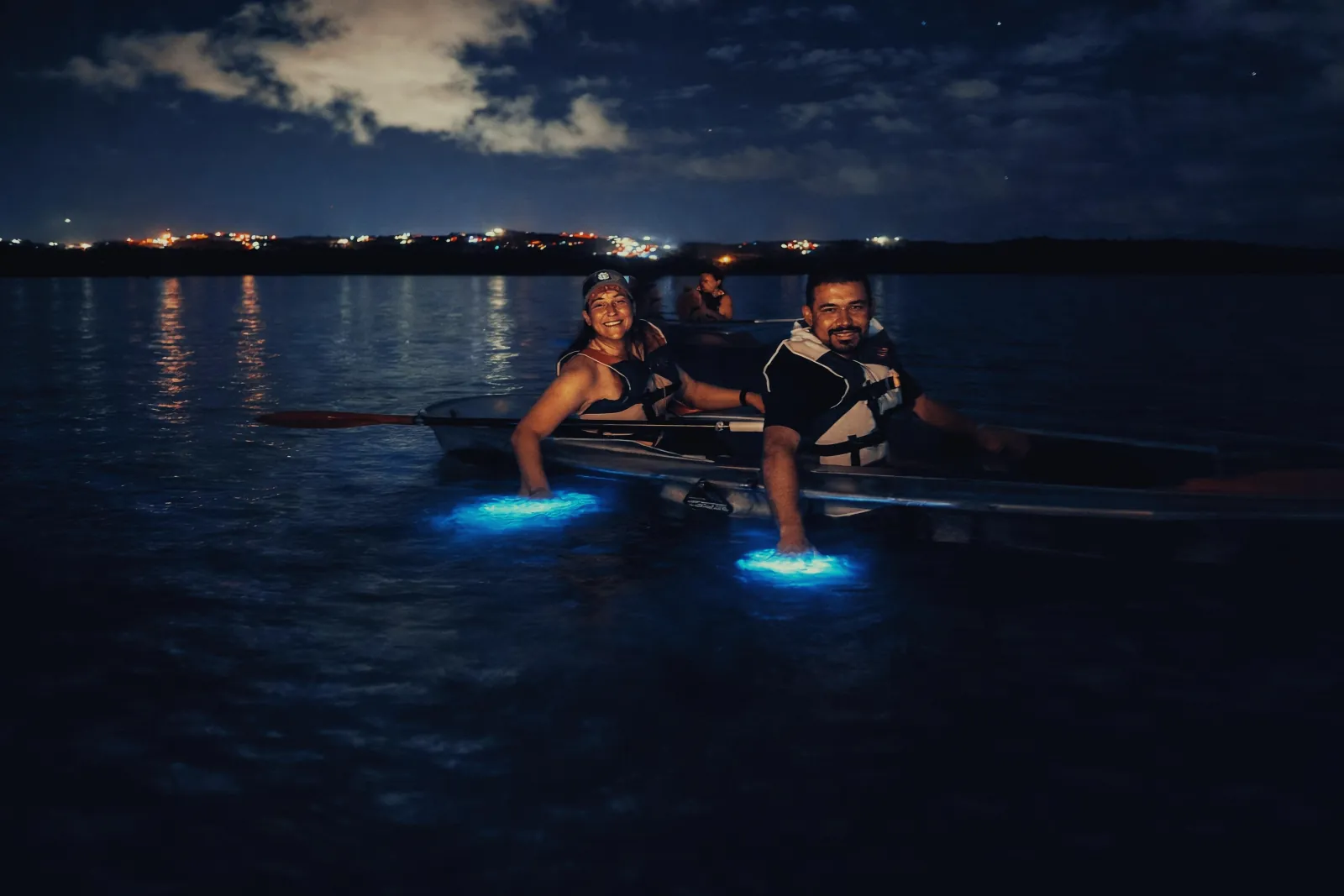
water. Swimming is prohibited at the other two to protect the organisms, so if
the idea of the glow outlining your arms as you move is what sold you on this in
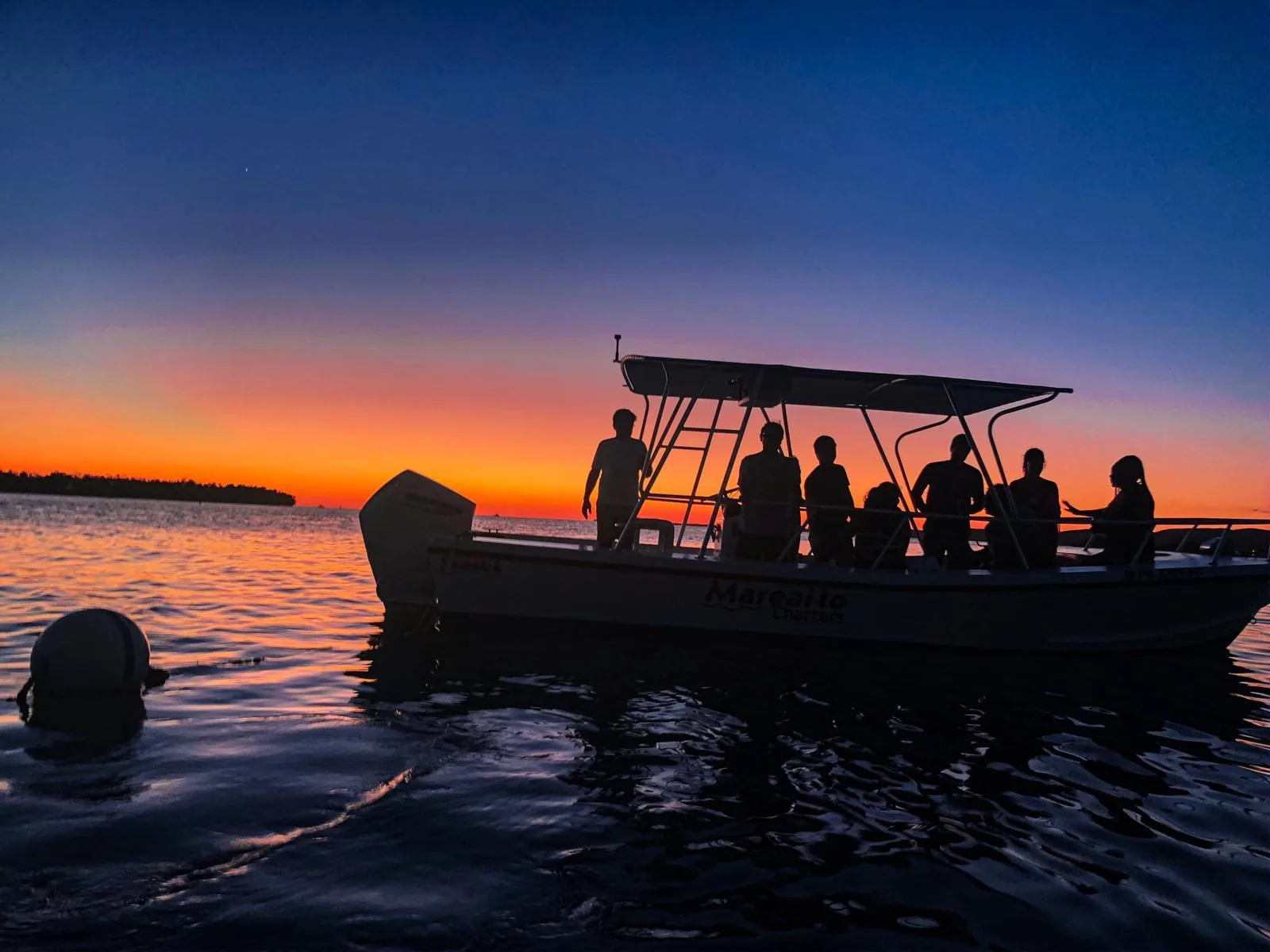
the first place, La Parguera is the only bay that can deliver it (our full La Parguera guide has the swim rules and every operator). The trips there
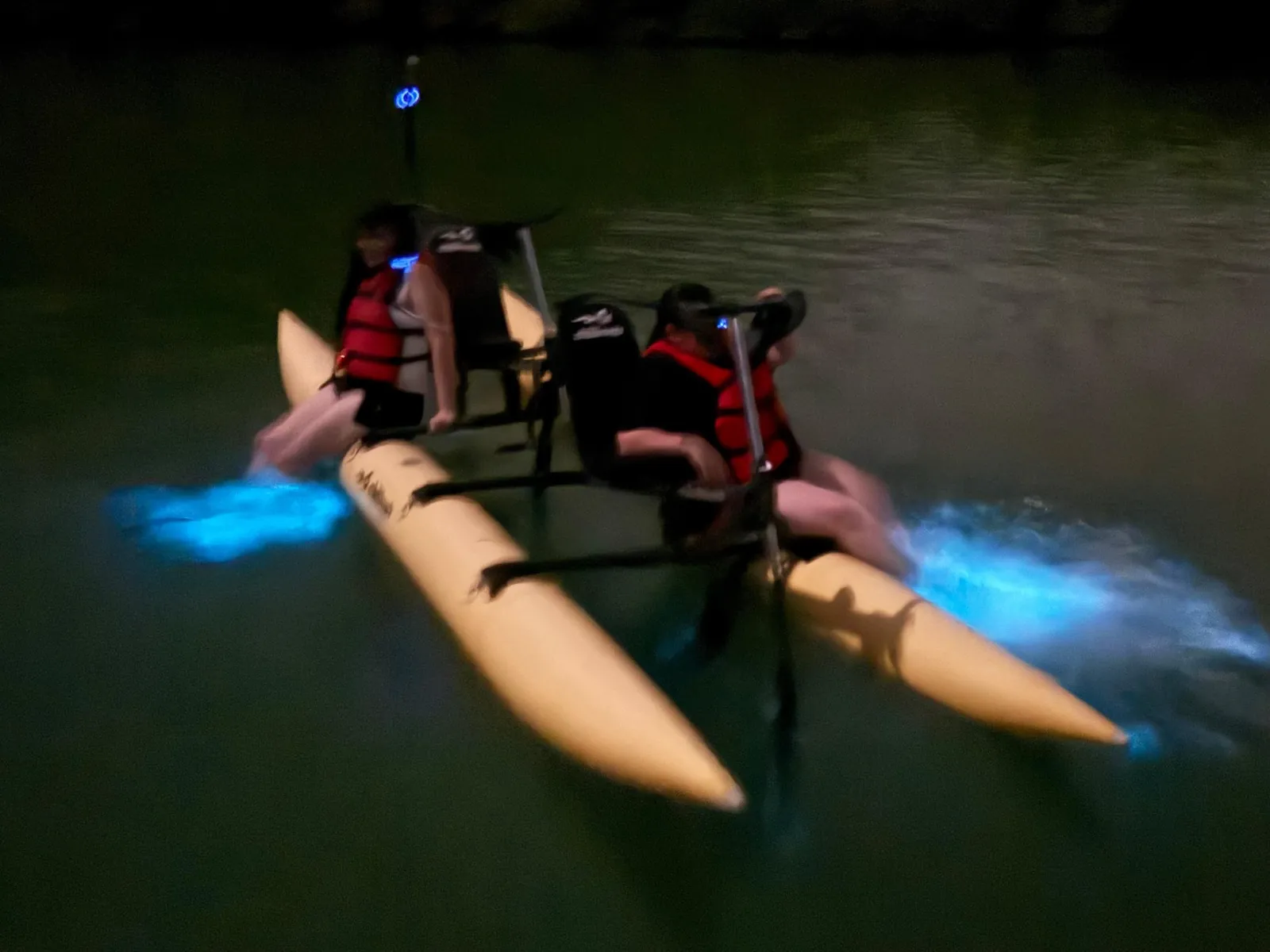
go out by boat or by pedal-powered water bike rather than kayak; our
clear kayak vs kayak vs electric boat guide compares the formats.
Our guide to Puerto Rico’s three bioluminescent bays
compares brightness, prices, swimming rules and logistics in one table. If you
would like that comparison laid out against your own trip, our guide to which bio bay tour is right for you
walks through the decision one question at a time, and our
every operator compared guide puts prices,
group sizes and age limits side by side.
What you pay depends mostly on how you reach the water. Tours that meet you at the
bay cost $52 to $112 per person, and San Juan pickup starts at $110; our guide to
what a bio bay tour costs sets out the prices bay by
bay, with the extras.
What the tours are actually like
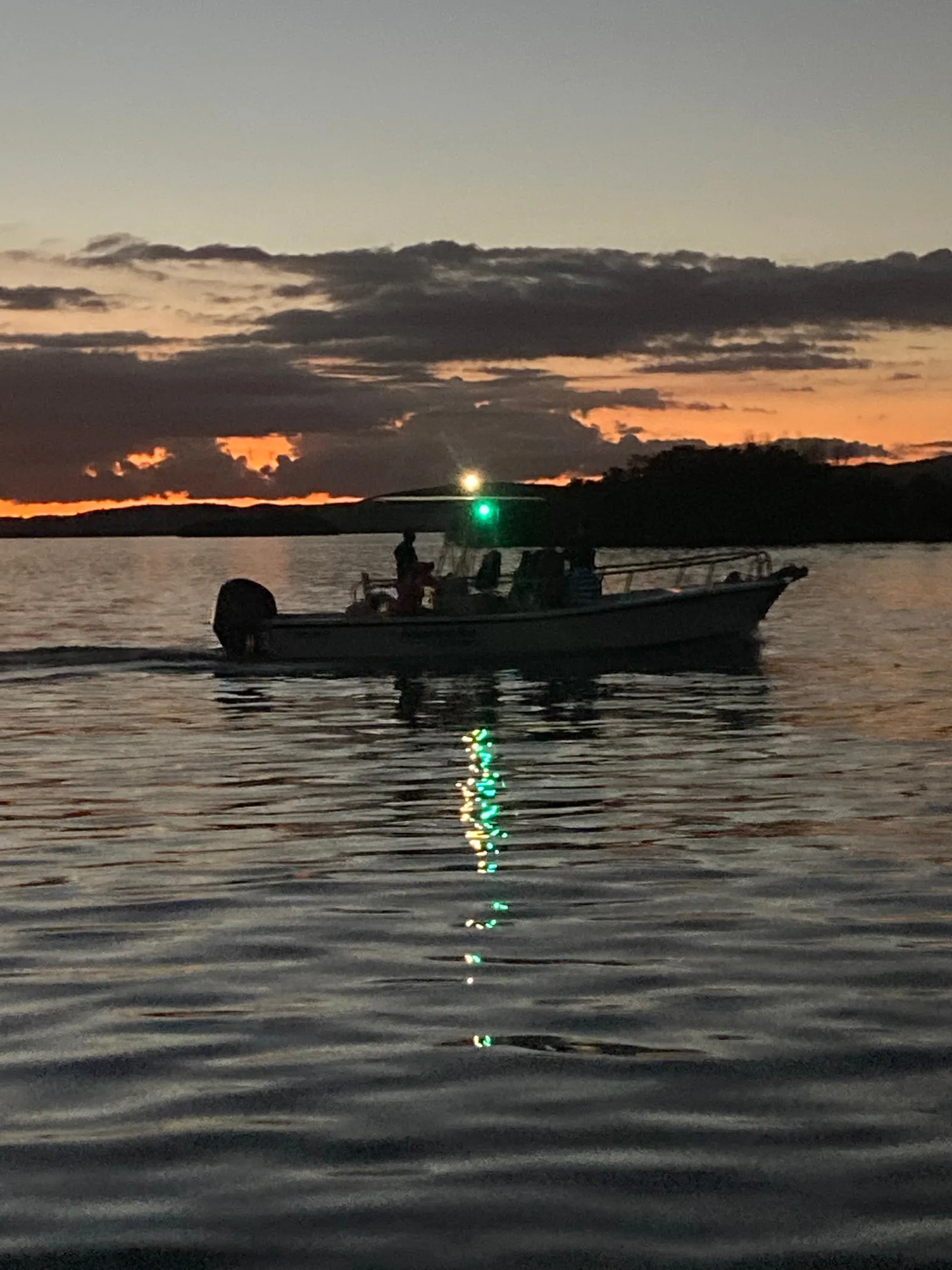
Every tour on this site launches after sunset. You check in at dusk, get a life
jacket and insect repellent, and sit through a paddling briefing that is longer
than you expect and more useful than it sounds — the channels are narrow and a
group of first-time kayakers colliding in the dark is the single most common
complaint in the reviews we read.
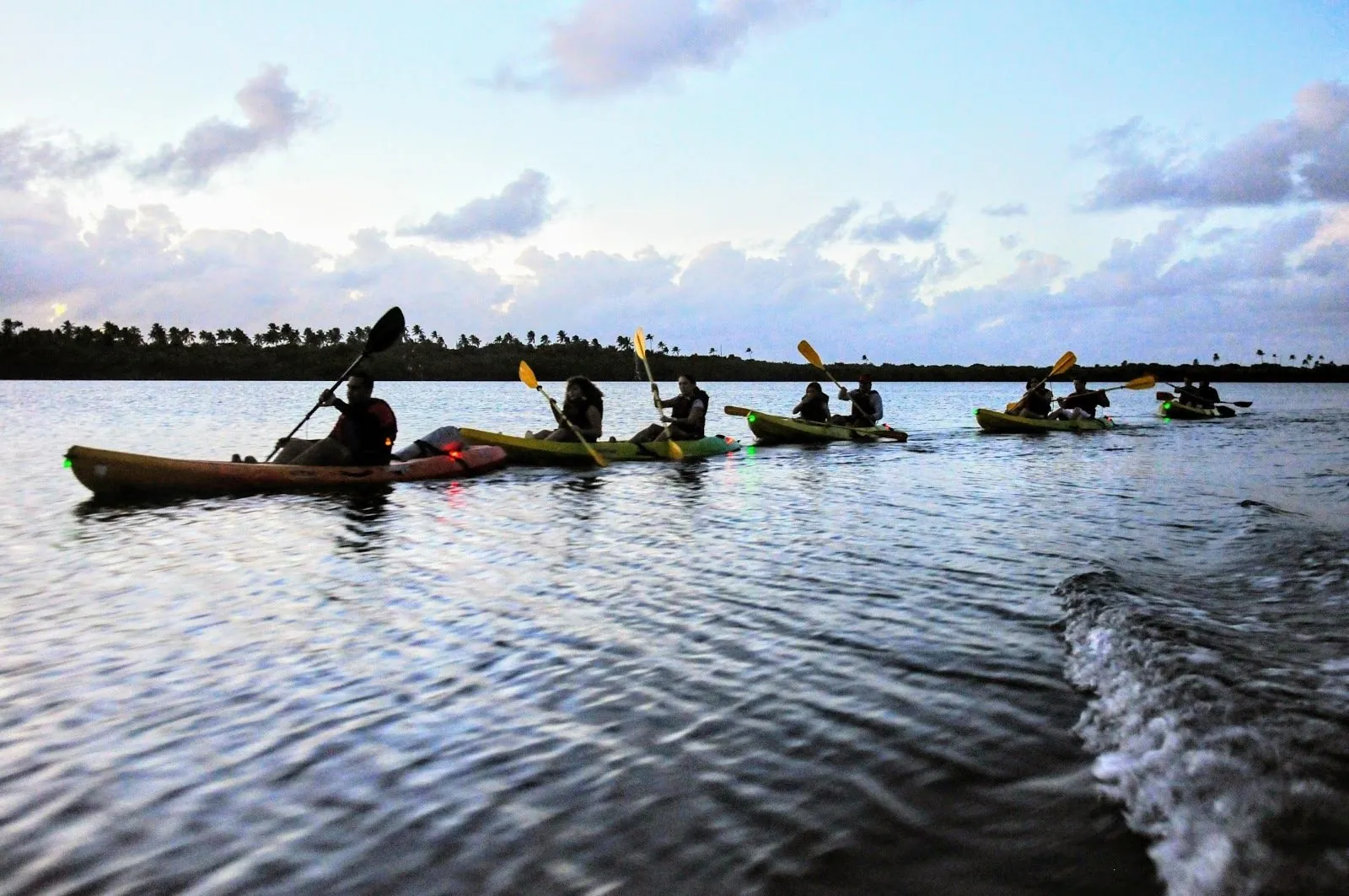
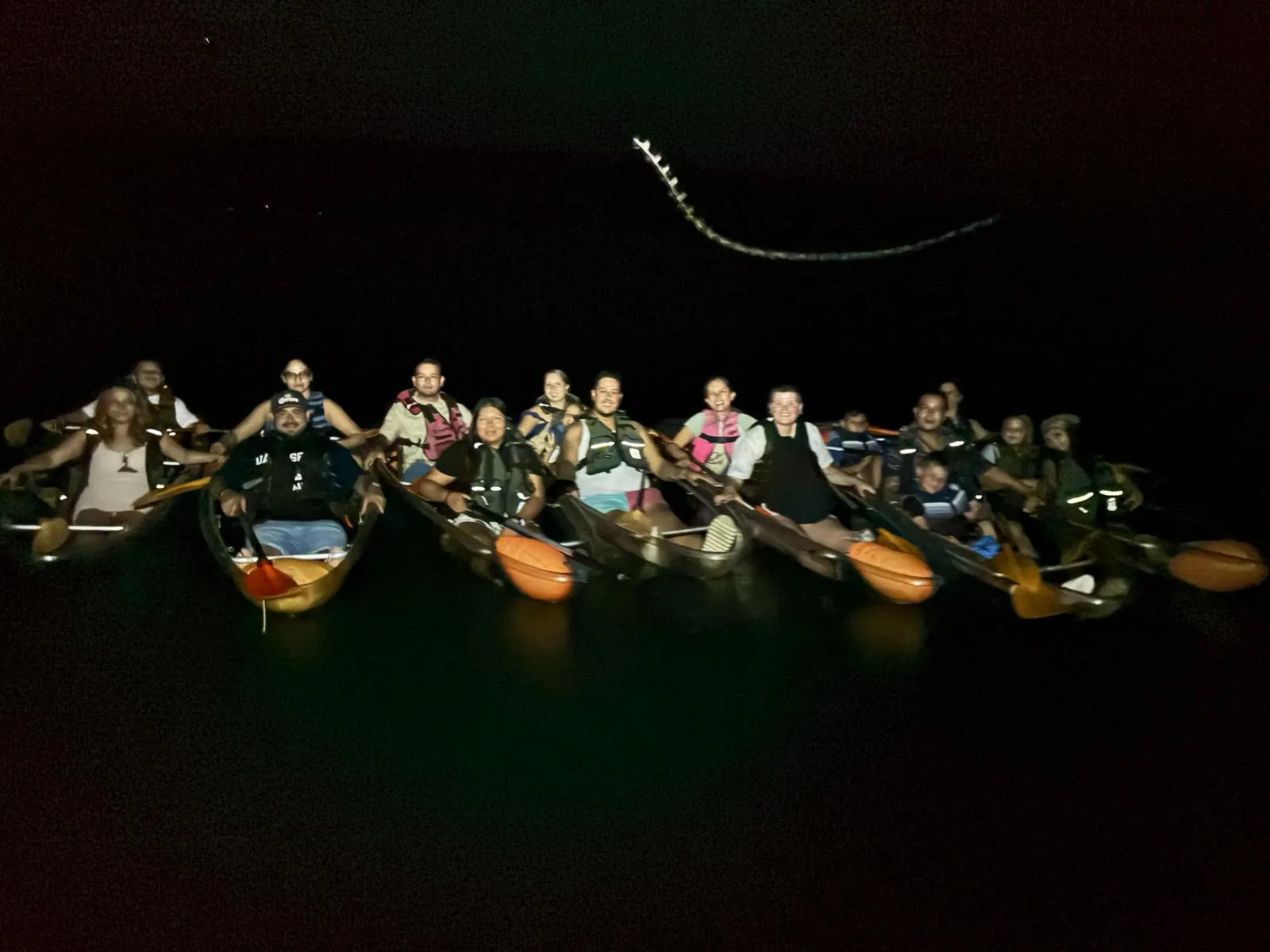
Then you go out in the last of the light and come back in full darkness. Guides
raft the group together in open water and stop. You put a hand in, and it lights
up. Fish crossing underneath leave visible trails. Our guide to
bio bay kayak tours walks through the night step by
step, from the weigh-in to the paddle back, with what to wear and what to leave in
the car.
Your photographs will not work. This is worth saying plainly, because it
disappoints people every night of the year. The light is far too dim for a phone,
and one Vieques operator states in its own listing that no camera of any kind
guarantees the glow will appear in your pictures — and that it offers no refund
on that basis. Some Fajardo operators include professional photographs of your
tour, which is a better answer than fighting your phone in a rocking kayak.
Picking an operator
Once the date is right, the differences between operators come down to group
size, where you start from, and what hull you are in. Groups run from around a
dozen to twenty-four people. Starting from Las Croabas in Fajardo rather than a
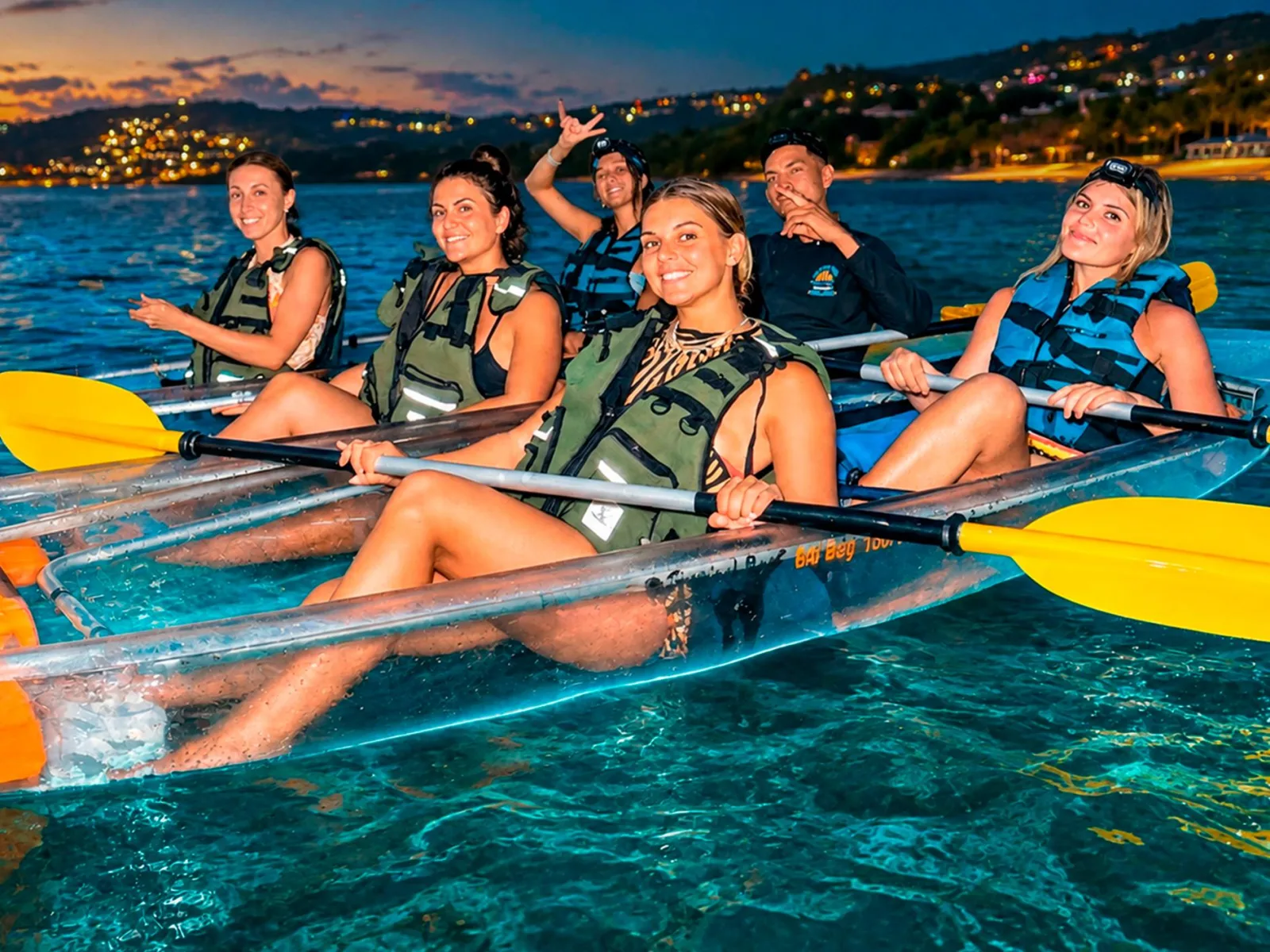
San Juan hotel saves you money and about three hours. Clear-bottomed kayaks and
canoes put the glow underneath you as well as beside you, which on a bright night
is a genuine difference rather than a gimmick.
The tours we rate most highly are not always the ones with the best scores. The
San Juan pickup kayak tour
is rated 4.4 from 95 guests, and reading those reviews explains why: group size, and
dark nights that were never going to glow. The
tour we feature instead
has more reviews and a better rating, and the thing reviewers praise most is
that the operator emails guests in advance when conditions look poor. People who
got that warning, went anyway, and saw almost nothing still gave it five stars.
If you want the cheapest honest version, the
Kayak Village departure at $72 includes
more than anything else we list. If you want to swim rather than paddle, the
La Parguera sunset cruise
goes to the one bay where that is allowed. And if you want the brightest water
on earth, the Vieques clear kayak
is $55 — plus a ferry and a hotel.
That is the right way to judge a bio bay tour. Nobody can sell you a guaranteed
glow. What a good operator can sell you is an honest forecast, a safe boat, a
guide who knows the channel in the dark, and a night out on the water that is
worth the drive whether or not the water cooperates.
 from $192/night