Laguna Grande, Fajardo: Complete Guide to the Closest Bio Bay to San Juan
Laguna Grande in Fajardo is the closest bio bay to San Juan. Real 2026 tour prices, kayak vs electric boat, best months, sargassum and getting back.
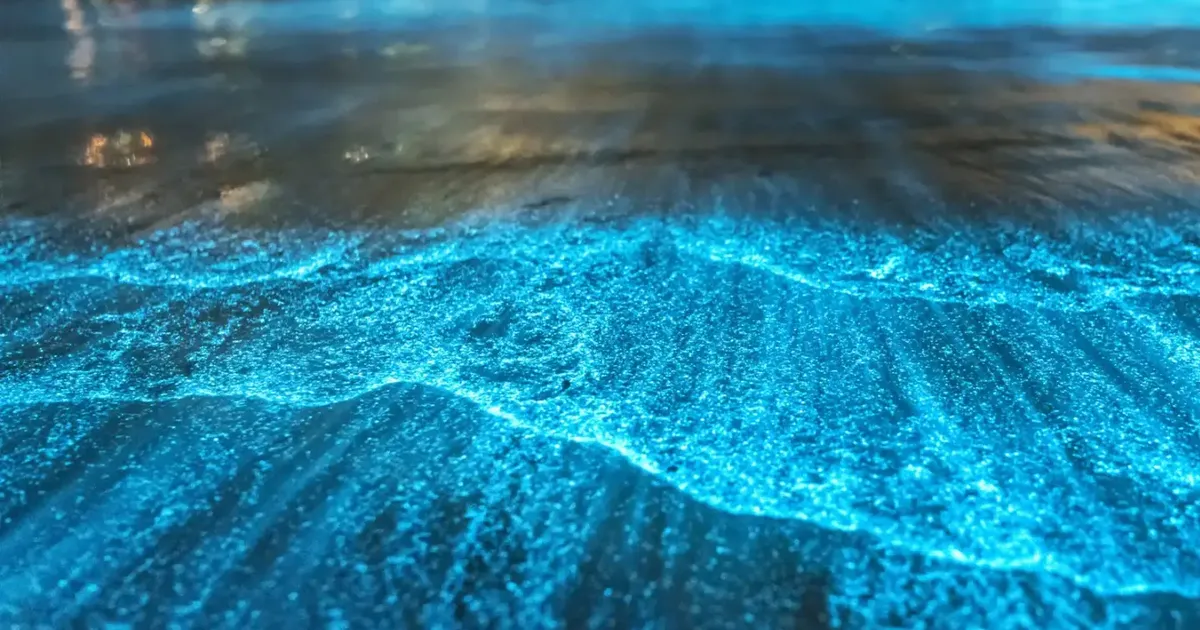
The first thing you notice isn’t the glow. It’s the dark. Ten minutes into the mangrove channel at Las Croabas, the sky shrinks to a ribbon above the red-mangrove roots, your guide’s light bobs somewhere ahead, and every paddle stroke drips with faint blue-green sparks. Then the channel opens into Laguna Grande, a protected lagoon on the northeastern tip of Puerto Rico, and the sparks become the show. It’s the closest bio bay to San Juan, and the most visited for that reason. Some nights it’s dazzling, and some nights you’ll need a tarp over your head to see anything.
The short answer: Laguna Grande is a bioluminescent lagoon inside Reserva Natural Cabezas de San Juan in Las Croabas, Fajardo, about 35 miles (45–75 minutes) east of San Juan. You can only visit on a guided tour: usually a 2-hour, two-person kayak paddle through a mangrove channel ($55–$89 per person, or about $110–$185 with San Juan transport), or a small hybrid-electric boat with BioIsland ($69 plus tax). The glow is real but varies. It’s generally strongest from August to November and on dark, moonless nights, and weaker in late winter, after heavy rain, or when sargassum gets into the lagoon, and 2026 is a record sargassum year. Swimming is not allowed.
Check Availability
Is the Laguna Grande bio bay worth it?
Yes, for most visitors based in San Juan, as long as you treat it as a night-paddling adventure with a chance of spectacular glow, not a guaranteed light show.
- Convenience is unbeatable. Discover Puerto Rico calls Laguna Grande “Puerto Rico’s most visited bioluminescent bay due to its proximity to San Juan.” No ferry, flight or overnight stay is needed, unlike Mosquito Bay in Vieques.
- The mangrove channel is half the fun. Even on low-glow nights, many reviewers say paddling the dark mangrove tunnel and stargazing in the lagoon made the trip worthwhile.
- Brightness is the risk. A 2018 PBS NOVA report found that after Hurricane María, Laguna Grande had “about the same number of dinoflagellates” as before but “isn’t glowing much at all.” Study data from 2018 to 2021 later showed “frequent and intense blooms.” In 2025 and 2026, TripAdvisor reviews mention “high levels of sargassum, limiting bioluminescence visibility,” and at least one operator offered full refunds before tours because of “unusual sargassum conditions.”
- Who should pick Vieques instead: if the glow is the only reason you’re going and you have an extra day, Mosquito Bay is the safer bet for brightness. Discover Puerto Rico notes it “was recognized in 2006 by Guinness World Records as the brightest bioluminescent bay in the world.” Our guide to getting to Vieques covers the ferry, the flights and whether a same-day trip works.
What and where is Laguna Grande?
Laguna Grande (“big lagoon”) is a shallow coastal lagoon on Puerto Rico’s northeastern tip, inside Reserva Natural Cabezas de San Juan in the Las Croabas sector of Fajardo. It connects to the sea through a narrow red-mangrove channel, and that channel is your route in.
- Size and depth: researchers describe it as a “50-ha saltwater coastal lagoon” about 3 m deep (Govender & Jury 2024, citing Soler-López & Santos 2010).
- Launch point: almost all kayak tours, and BioIsland’s boat, leave from Kayak Village at the end of PR-987 in Las Croabas, or from the nearby Parque Pasivo Las Croabas.
- Puerto Rico’s three bio bays: Laguna Grande (Fajardo), Mosquito Bay (Vieques) and La Parguera, or Bahía Fosforescente (Lajas). Compare them in our guide to Puerto Rico’s three bioluminescent bays.
- A busy lagoon: tour operators reported about 34,000 kayak rentals to visit Laguna Grande in 2018, worth roughly $1.7 million (cited in Govender & Jury, Revista de Biología Tropical, 2024).
Why does Laguna Grande glow?
The glow comes from the dinoflagellate Pyrodinium bahamense, a single-celled plankton that flashes blue-green light when it’s disturbed. Your paddle, your hand or a passing fish triggers the flash, which is thought to be a defense that startles predators.
- P. bahamense is the “dominant bioluminescent dinoflagellate” in Puerto Rico’s bio bays (Govender & Jury 2024).
- Blooms depend on a “delicate balance” of sea level, wind-driven currents, sunlight, turbidity, sea temperatures of 24–29 °C, salinity and runoff (Govender & Jury 2024, citing Sastre et al. 2013).
- The surrounding red mangroves supply organic nutrients, and the reserve’s reef acts as a partial breakwater (PBS NOVA).
- Why swimming is banned here, and where it isn’t, is covered in our guide to swimming in the bio bays.
History and protection: Cabezas de San Juan and Para la Naturaleza
The lagoon is protected because the Conservation Trust of Puerto Rico bought the headlands in 1975, and that purchase is why Laguna Grande isn’t ringed by resort lights today.
- 1975: the Conservation Trust acquired 321 acres of the San Juan Headlands, “rescuing this site of immense ecological importance from a proposed resort development” (Lighthousefriends.com).
- 1986: the area was designated a nature reserve (Discover Puerto Rico: “Protected since 1975 and designated a nature reserve in 1986”).
- 2007: DRNA, which regulates commercial tours, banned swimming in April 2007.
- 2013: the Trust launched its nonprofit unit Para la Naturaleza, which runs tours at the reserve today.
El Faro: the 1882 lighthouse
The neoclassical Cabo San Juan Lighthouse (El Faro de Fajardo) was built in 1880–81 and first lit on May 2, 1882.
- It has a 45-foot cylindrical tower attached to a one-story keeper’s duplex, and was listed on the National Register of Historic Places in 1981 (Clio).
- The Trust restored it from 1989 and won the American Express Preservation Award in 1991. The lighthouse was formally transferred to the Trust in 2010 (Lighthousefriends.com; Clio).
- Oldest or second-oldest? Lonely Planet calls it “Puerto Rico’s oldest lighthouse,” but Lighthousefriends.com and Clio say it was the second lighthouse built in Puerto Rico’s Spanish-era system. We go with second-oldest.
- Access: some 2026 Para la Naturaleza event pages say “Debido a los trabajos de restauración no hay acceso al área de edificio del Faro” (because of restoration work, there’s no access to the lighthouse building), while other 2026 listings still describe going up the lighthouse. Call (787) 722-5882 before you go.
How bright is Laguna Grande? A reality check
Laguna Grande glows every night, but how bright it looks can range from vivid turquoise swirls to faint sparkles you only notice under a tarp. Three things make the difference: the season, conditions in the lagoon (rain, sargassum, wind), and light (the moon and the shoreline).
What the research says about seasons
The best peer-reviewed data shows densities are generally highest in late summer and fall (August to November) and lowest in late winter and spring.
Govender & Jury (2024, Revista de Biología Tropical 72: e56729) sampled three to four sites twice a month from July 2016 to December 2021, just after sunset. Their findings:
- “Generally low values were recorded in late winter in contrast with higher values in late summer (Aug–Nov).”
- Mean monthly density peaked in November (about 1,062,000 cells per liter) and October (about 831,800), and was lowest in April (about 77,700) and May (about 78,500). The November mean was roughly 13 times the April one.
- Individual monthly counts ranged from 4,388 cells per liter (June 2018) to 2.19 million (November 2019), about a 500-fold swing.
- Year to year, densities were low in 2016–2017 (the 2017 mean was about 41,600 cells per liter) and much higher in 2018–2020 (the 2019 mean was about 781,200). The authors describe “frequent and intense blooms in 2018–2021 punctuated by hurricanes.”
- Their conclusion: “dinoflagellate counts fluctuate widely,” and hurricanes play a role by “raking and refreshing” the lagoon.
An earlier three-year study by Sastre et al. (2013) also found higher P. bahamense densities in summer and lower densities in winter (December to March), with weak links to nutrients (as summarized by Govender & Jury 2024).
What this means for you: the dry season (December to April) brings nicer weather and bigger crowds, but the data points to August to November for the densest blooms. That window is also hurricane season, so leave room in your plans. Our best-time guide has a month-by-month table and a new-moon calendar.
After Hurricane María
The lagoon dimmed after María in 2017, partly recovered, and then had strong blooms from 2018 to 2021.
- UC San Diego’s Latz Laboratory reported on October 30, 2017 that three of four Caribbean bio bays “went dark after Maria,” adding that “the bioluminescence of Mosquito Bay in Vieques, Laguna Grande in Fajardo, and the Salt River Bay bioluminescent bay in St. Croix have recovered,” while La Parguera “was largely spared.”
- PBS NOVA (2018) reported that Laguna Grande wasn’t “glowing much at all” despite normal dinoflagellate counts, a reminder that cell counts and visible brightness are not the same thing.
Sargassum in 2025–2026
2026 is a record sargassum year in the Caribbean. When mats get into the Laguna Grande channel, they can sharply reduce the visible glow.
- The University of South Florida Optical Oceanography Lab reported in its June 30, 2026 bulletin that “The Caribbean Sea continued to show record-high sargassum amount for the month of June,” with about 9 million metric tons in the eastern Caribbean, and a Gulf total of 5 million metric tons that “nearly doubled the historical record in 2025” (as reported by the St. Thomas Source).
- USF’s July 31, 2026 bulletin said that “total sargassum amount in every region started to decrease in July” and that beaching events “will continue, but likely not as severe as in June – July” (St. Thomas Source, August 3, 2026). USF stresses its outlooks aren’t beach-specific forecasts.
- This has happened before. In August 2015, DRNA declared an emergency over a mass fish kill and “excessive accumulation of sargassum” at the lagoon and removed mats from the access channel. In June 2021, marine biologist Sandra Schleier told El Nuevo Día that sargassum at Las Croabas endangers the bay’s brightness because it changes the water chemistry.
- Eco Adventures’ 2026 tour page says sargassum “can affect the appearance of the water or temporarily reduce the visibility of bioluminescence, but it does not eliminate the organisms.”
USF’s August 2026 bulletin expects sargassum to “continue to decrease in the coming months until possibly November” (St. Thomas Source, September 1, 2026). Even so, in fall 2026 ask your operator about channel conditions 24 to 48 hours before your tour.
Light pollution and the moon
- Moon: Kayaking Puerto Rico puts it simply: “Little moonlight, brightest glow. But no matter how bright, it glows every day.” A full moon can wash out a faint glow, which is why guides bring tarps.
- Shoreline lights: Para la Naturaleza’s night program has included a lighthouse stop to look at how light pollution around the reserve affects bioluminescence and wildlife.
How good operators handle low-glow nights
The best operators tell you ahead of time, offer a refund or rebooking before the tour, and bring tarps to create darkness on the water. Look for:
- Advance notice plus a refund offer. One 2026 operator response on a booking platform reads: “we informed all guests that the bioluminescence was significantly affected by the unusual sargassum conditions and offered the option to cancel for a full refund.” A TripAdvisor reviewer praised Pure Adventure because “they warned us ahead of time that the bioluminescence would be hard to see and offered a refund.”
- Tarps. Several reviews mention guides draping tarps over kayaks so you can see a faint glow, including a July 2025 review: “With the help of tarps we were still able to see some bioluminescence.”
- The fine print. Most operators don’t refund for low glow once the tour runs. Puerto Rico Access Tours says “Low or absent glow does not qualify for a refund,” and Eco Action Tours says it “is not responsible if bioluminescence is not visible.”
How do you get from San Juan to Fajardo?
Drive east about 35 miles on PR-3 (or the PR-66 toll expressway), then follow local roads to PR-987 and Las Croabas. Plan on 45 minutes with no traffic and 75 minutes or more at rush hour. Discover Puerto Rico puts it at “a one-hour-and-fifteen-minute drive” via PR-3; Pure Adventure and Puerto Rico Activities say about 45 minutes from the San Juan metro area.
Route, tolls and parking
- Route (per Pure Adventure’s driving directions): take PR-3 east, optionally via the PR-66 expressway, which “circumvents traffic” and has a toll. Near Fajardo, turn left at Plaza Fajardo (Walmart) onto Valero Ave (PR-194), then left onto El Conquistador Ave. At the end, turn left onto PR-987 (Carretera Las Cabezas), pass the El Conquistador entrance, and follow the road to Kayak Village.
- Tolls: PR-66 and parts of PR-53 are tolled electronically through AutoExpreso. Rental cars usually include a toll tag and bill you afterward, so ask at pickup.
- GPS warning: Pure Adventure advises, “do not trust the GPS, they do not work precisely in our area.” Its backup coordinates for the launch site are 18°21'48.2"N 65°37'41.0"W.
- Parking: several operators say parking is free at the Kayak Village roundabout and in public lots at Parque Pasivo Las Croabas, first come, first served. Pure Adventure warns, “On Saturdays the park is normally very crowded.” Arrive 20 to 30 minutes early.
Can you Uber or taxi back from Fajardo at night?
Don’t count on it. Getting there by Uber is usually possible. Getting back to San Juan after a 9 or 10 p.m. finish often isn’t.
- TripAdvisor forum regulars say “Ubers are very limited on the east side. There’s a very slim chance you’ll find a ride at night,” and that taxis and Ubers “are rare at that end of the island, especially at night.”
- Pre-booked taxi: one Fajardo taxi service lists San Juan–Fajardo one way from $110 and a round-trip minivan from $220 (AAA Trip Canvas listing). For groups of 4 or 5, that can beat per-person transport packages.
- Best options: rent a car, book a tour that includes San Juan transport, or pre-book a round-trip taxi.
Laguna Grande tours with transport from San Juan
- Booking platforms list bio bay kayak tours with San Juan pickup from about $110–$125 per adult. On GetYourGuide, Puerto Rico Access Tours' San Juan Bioluminescent Laguna Grande Bay Night Kayaking is $125 (4.4/5 from more than 90 reviews), and the From San Juan: Bioluminescent Bay Kayak Adventure at Night is $110. The second is the most-booked bio bay tour on GetYourGuide, with more than 600 reviews, but it is rated lower (4.1/5), and reviewers mention large groups.
- Paradise Seekers charges $85 self-drive or $145 with hotel pickup from San Juan, Río Grande, Luquillo or Fajardo.
- Some packages list pickups at the San Juan cruise port (Pier 4).
Cruise passengers: will you make it back?
Only book Laguna Grande if your ship is in port overnight or leaves late (around 11 p.m. or later). Even then, choose a transport-included tour with an early (sunset) slot. Transport-inclusive tours run about 5 to 5.5 hours door to door, and evening kayak check-ins start at 5:45 to 6:30 p.m. depending on the season. That puts you back in Old San Juan around 10 to 11 p.m. at the earliest. Ask the operator for a written return time and keep your ship’s all-aboard time in mind.
Which Laguna Grande tour type should you choose?
Most people should book a standard two-person kayak tour. If you can’t or don’t want to paddle, the BioIsland boat is the only reliably bookable alternative. Clear-kayak tours and Para la Naturaleza’s lagoon boardwalk night tour are hard to find or unconfirmed in 2026.
| Tour type | Duration | 2026 price range (per person) | Min. age | Difficulty | Group size | Best for |
|---|---|---|---|---|---|---|
| Standard 2-person kayak (self-drive) | About 2 hrs (some listings 1.5–3 hrs) | $55–$89 (direct $55–$75; platforms $65–$89) | 5–6+ | Moderate: about 2 miles round trip of flat-water paddling | Up to 24–30 per group, with several groups on the water | Active travelers, couples, families with older kids |
| Kayak + San Juan transport | 5–5.5 hrs door to door | $110–$145 | 6+ | Moderate | Shared van + kayak group | No-car visitors, cruise overnights |
| Hybrid-electric boat (BioIsland) | About 1 hr 15 min | $69 + tax | Not confirmed by the operator (one third-party source says 3+) | Easy | About 6 passengers (third-party and review sources) | Seniors, pregnant travelers (check first), anyone who can’t paddle |
| Clear or glass-bottom kayak | About 2 hrs | Not confirmed for 2026 | Weight caps (e.g., 190 lb in one older listing) | Moderate | Small | Photographers, if you can find a current operator |
| Para la Naturaleza night tour (trolley + boardwalk) | About 2 hrs | Listed $24 adult/senior, $14 student, but no 2026 dates found | Under-18s with an adult | Easy (Level 1) | Trolley-sized | Non-paddlers, educational visits |
| El Yunque + bio bay combo | 8.5–12 hrs | $115–$184 | 6–7+ | Moderate to strenuous (hiking + paddling) | Small van groups | Short trips with no car |
| Catamaran or Icacos + bio bay combo | Full day | From $152 (Eco Adventures) | 5+ | Moderate | Varies | Beach + bio bay in one day |
Standard kayak tour
This is the classic Fajardo bio bay kayak tour: tandem sit-on-top kayaks, a short lesson, about 25 to 30 minutes through the mangrove channel each way, and time in the lagoon. It’s beginner-friendly, but you do have to paddle; Eco Adventures says “guests must paddle their own kayak.” On GetYourGuide, Kayaking Puerto Rico’s Fajardo Bio Bay Kayak Tour is $72 (4.4/5 from more than 300 reviews), and Puerto Rico Bio Bay Tours' Fajardo Bioluminescent Lagoon Kayak or Full Moon Kayak Tour is $85 (4.6/5 from more than 270 reviews).
Clear kayak at Laguna Grande: does it exist?
We couldn’t confirm any operator currently running clear or glass-bottom kayaks in Laguna Grande in 2026. Wanderlog lists the “Glass Bottom Bio Bay Kayak Tour” in Las Croabas as “Permanently Closed.” One TripAdvisor reviewer of “The Glass Bottom” complained, “THEY’RE NOT GLASS BOTTOM!” A Yonder Tours listing dated 2025 still advertises glass-bottom kayaks from San Juan for participants weighing “190 lbs (86kg) or less.” Most clear-kayak tours sold under “Fajardo” actually run in Vieques: the Vieques Bioluminescent Bay Full Clear Kayaking tour, for example, is listed under Fajardo and meets in Esperanza on Vieques. Check the location before you pay.
Fajardo bio bay electric boat tour
BioIsland is the operator we can confirm in 2026. Its website lists “Monday-Friday 1hr 15 min $69+tax per person,” with “BioBay in Boat” and “Moonlight Tour on Biobay” options, departing from Kayak Village (checked October 1, 2026). It isn’t sold on GetYourGuide, so book with the operator directly.
- Boat: PuertoRicoDayTrips (updated January 2025) describes a low-profile Carolina Skiff that uses a gas motor until the channel and then switches to electric, so it’s a hybrid.
- Capacity: about 6 passengers plus captain and guide. A June 2026 TripAdvisor review said the boat “fit 6 people comfortably.”
- Booking: online, or call 787-422-7857. Cancel 48 hours ahead for a full refund. Spots are limited, so book early.
- Captain Suarez / Baby Bay Cruising Lagoon: historically the second electric-boat operator, but we found no 2025–2026 primary source confirming it still operates, and TripAdvisor shows “Booking unavailable.” Treat it as unconfirmed.
Para la Naturaleza boardwalk and trolley night tour
This used to be the best no-paddle option: a trolley ride to a boardwalk over the lagoon, plus a lighthouse stop to talk about light pollution. We found no bookable 2026 dates. The event page (“Bioluminiscencia y contaminación lumínica”) lists $24 individual, $24 senior and $14 student, but shows no scheduled events. A different 2026 night walk, “Vida Nocturna en Cabezas de San Juan” ($12 / $9 / $9), covers the dry forest and Seven Seas beach and doesn’t mention the lagoon. Call (787) 722-5882 to check.
Combo tours: El Yunque and bio bay, catamaran and bio bay
- Kayaking Puerto Rico + Island Journeys: Rainforest & Bio Bay, $165 plus tax with transport.
- Island Journeys’ “Two-in-One Day Trip”: $184, sold on GetYourGuide as San Juan: El Yunque and Bio Bay Full-Day Tour with Transport (4.7/5 from more than 240 reviews).
- Bespoke Concierge El Yunque Rainforest & Bio Bay: $165, 12 hours, ages 7+, sold on GetYourGuide as From San Juan: El Yunque Rainforest & Bio Bay Kayak Combo (4.5/5 from more than 160 reviews). It’s a long day, with “4 to 4.5 hours of combined drive time.”
- Yokahú Kayak Trips Bio Bay & El Yunque: from $115, 8.5 hours.
- Eco Adventures: Luquillo Beach + El Yunque + Bio Bay from $165 (10 hours); Catamaran & Bio Bay from $152.
- Our take: combos are good value if you don’t have a car, but you’ll paddle tired after a rainforest hike. If you’re driving yourself, split it: El Yunque in the morning, Luquillo kioskos for lunch, then the sunset paddle.
Who are the best Laguna Grande bio bay tour operators?
These are all established operators launching from Las Croabas. Choose on policies (low-glow warning, refund window, group size) more than on the headline price. Prices were checked on operator sites or booking platforms in 2026, mostly in September and October. They change, and taxes and DRNA fees aren’t always included.
| Operator | Known for | Price (2026) | Min. age / weight | Schedule | Transport | Policies (as published) |
|---|---|---|---|---|---|---|
| Kayaking Puerto Rico (KPR) | Largest and most-reviewed (TripAdvisor 4.8 from 4,332 reviews); combos; a newer Vieques night trip ($195) | $70 + taxes & fees direct; $72 on GetYourGuide (book on GetYourGuide) | 6+ | Mon–Sat; seasonal check-ins (e.g., Oct–Jan 5:45 & 8:00 pm) | Combo $165 includes transport | Minimum 6 guests per tour; free cancellation 24 hrs on GetYourGuide |
| Pure Adventure | Marine-biologist guides; tarps; detailed driving directions | From about $66–$89 on platforms (book on GetYourGuide, 4.1/5) | Weight limit 220–240 lb listed | Sunset (around 5:30 pm) and later slots | Not standard | Free cancellation 24 hrs (platforms); “not canceled in rainy days”; no refund if you can’t finish; max 30 |
| Eco Adventures PR | Bilingual naturalists; honest sargassum disclosure; combos | $63 (FALL code, 20% off through Oct 31, 2026) | 5+; 250 lb per person / 425 lb per kayak | Evening | Combos include transport | Glow “cannot be guaranteed”; “No artificial lights are used” |
| Yokahú Kayak Trips | Lowest direct price; ACA-certified guides | $55 | 6+ | Evening | Combo with El Yunque from $115 | Check at booking |
| Puerto Rico Bio Bay Tours | Full-moon kayak tours; launches from Parque Pasivo | From $68 direct; $85 on GetYourGuide (book on GetYourGuide) | Check | 3-hr listing, 10–24 people | Not standard | Check at booking |
| Puerto Rico Access Tours | Adaptive and accessible paddling programs | $65 self-drive; $125 with San Juan transport (book on GetYourGuide) | 6+ | Sun–Fri, 6 & 8 pm | Optional | 48-hr cancellation; $20 change fee; “Low or absent glow does not qualify for a refund” |
| SALTours | Taxes included in price; marine-biologist guides | $75 | 6+; 225 lb per person / 450 lb per kayak | Evening | Not included | 48-hr cancellation for a full refund |
| Paradise Seekers PR | Simple all-in pricing | $85 self-drive / $145 with pickup | Check | Evening | Optional pickup | “No onsite refunds” policy noted |
| BioIsland (boat) | Small hybrid-electric boat | $69 + tax | Not confirmed | Mon–Fri | None | 48-hr cancellation; weather cancellations not charged |
Platform prices on booking sites usually run $10 to $20 above the operator’s direct price.
Our pick by traveler type:
- First-timers who want polish and reliability: Kayaking Puerto Rico, with the longest review history and clear seasonal schedules.
- Best education and low-glow handling: Pure Adventure or Eco Adventures, both open about conditions and both use tarps.
- Budget: Yokahú ($55), or Eco Adventures with the fall promo.
- Non-paddlers: BioIsland.
- Accessibility needs: Puerto Rico Access Tours.
What is the Laguna Grande kayak tour like, step by step?
Expect about 2 hours: a 15-minute briefing, about 25 to 30 minutes paddling the mangrove channel, 20 to 30 minutes in the lagoon, and the paddle back in full darkness.
- Arrive and check in (20 to 30 minutes early). Park, find your operator’s kiosk at Kayak Village (KPR is kiosk #11, Pure Adventure kiosk #1), and sign waivers. Many operators weigh guests. One reviewer said, “Don’t be put off by the weigh in, they explained their reasoning to me and it made sense.”
- Briefing and “Kayaking 101” (about 15 minutes). KPR’s tour includes “15min pre-ride instructions,” covering steering, paddle commands and reserve rules. You’ll get a USCG-approved life jacket and a two-person sit-on-top kayak.
- The mangrove channel (about 25 to 30 minutes each way). This is the part people remember. The channel is narrow and twisting, with red-mangrove roots overhead. Expect “bumper kayaks”: collisions with other boats are common and harmless. Eco Adventures puts the full route at about 2 miles round trip. On late tours it’s very dark. One reviewer of an 8:30 p.m. departure wrote, “I personally wouldn’t recommend the 8:30 pm tour because of how dark it was.”
- The lagoon. The channel opens into Laguna Grande. Guides gather the group, explain the dinoflagellates, and have you trail your hands and paddles to make sparks. You may see fish streak through the water like comets. Guides may use tarps if the moon is bright.
- Stargazing. KPR guides point out constellations, and the reserve’s darkness makes the sky a highlight on clear nights.
- Return. You paddle back through the channel in full dark, following navigation lights, then have snacks at the tent. Total time is about 2 hours.
How hard is it? Weight and age limits
- Physical demand: moderate. KPR rates it “Moderate Kayaking.” The paddling is flat water, but you need upper-body endurance for about an hour and teamwork with your partner. Steering in the channel is the hard part.
- Weight limits (examples): 425 lb combined per double kayak and 250 lb per person (Eco Adventures); 450 lb and 225 lb (SALTours); 240 lb per person on one platform-listed tour.
- Age minimums: 5+ (Eco Adventures) or 6+ (KPR, Yokahú, SALTours, Access Tours).
- Health exclusions: common exclusions include pregnancy, back or neck problems, heart conditions, recent surgery and casts (SALTours; Eco Adventures).
When is the best time to visit Laguna Grande?
Go on a dark night (within a few days of the new moon) between August and November, on a weekday, and take the first (sunset) departure. Then check the weather and sargassum 24 to 48 hours ahead. For month-by-month detail, see our best time to visit Puerto Rico and the bio bays.
- Moon phase: there’s no full-moon closure at Laguna Grande. Tours run year-round, and some operators sell full-moon tours, such as Puerto Rico Bio Bay Tours’ full moon kayak tour and BioIsland’s “Moonlight Tour.” The glow just looks fainter in bright moonlight.
- Sunset or later departure: we recommend the first departure (check-in about 5:45 to 6:30 p.m. depending on the season, per KPR’s schedule). You paddle out in twilight, see the mangroves and wildlife, and reach the lagoon as it gets dark. The later tour is darker in the lagoon but much harder in the channel.
- Weekday or weekend: Saturdays are “normally very crowded” (Pure Adventure). Several operators close on Sunday or Saturday, so weekdays have the fewest boats in the channel.
- Rain: light rain doesn’t cancel tours, and Pure Adventure jokes, “We will get wet anyways.” Heavy rain or lightning can delay or cancel them, and heavy runoff can dim the glow for days.
What should you bring and wear? Rules on the water
Wear quick-dry clothes and water shoes, bring a towel and dry clothes for the drive, and leave valuables in the car.
- Wear: a swimsuit or activewear, flip-flops or water shoes, and a light layer for the return paddle.
- Bring: a phone in a dry bag, a towel, a change of clothes and cash for tips. KPR advises: “DO NOT BRING ANY VALUABLES OR ITEMS THAT CANNOT GET WET.”
- Bug spray: most operators provide eco-friendly repellent. Skip heavy DEET or sunscreen on your hands, because chemicals end up in the lagoon. Use the provided product or apply it only to your clothes.
- Swimming is not allowed. DRNA has prohibited it since April 2007, and PuertoRicoDayTrips says the ban “has had a positive effect on the health (brightness) of the bio bay.”
- Lights: no flash or flashlights. Eco Adventures says “No artificial lights are used to protect the natural environment.”
- Don’t touch or step on mangrove roots, take anything, or pour water from the lagoon into your kayak.
- The smell: mangroves “may sometimes have a sulfur-like odor” from decomposing organic matter, which is normal (Eco Adventures).
Photography tips
Most phones won’t capture the glow well. Plan to enjoy it with your eyes and accept that your photos will be limited.
- Use a phone night mode with the phone braced on the kayak, or a camera at ISO 3200–6400, f/1.8–2.8 and 2–8 second exposures. Movement makes this hard.
- Take your best shots at the sunset launch and in the channel at twilight.
Is Laguna Grande good for kids, seniors and travelers with limited mobility?
Kids aged 6 and up who can sit still and paddle a bit do well, paired with an adult. Seniors and travelers with limited mobility should take the boat or an adaptive tour.
- Kids: the minimum age is 5 or 6. Put the stronger paddler in the back seat, since that person steers, and choose the sunset departure.
- Seniors: BioIsland’s boat avoids the paddling. TripAdvisor reviewers have long recommended it for older travelers and pregnant guests, but check health policies with the operator first.
- Accessibility: Puerto Rico Access Tours advertises adaptive paddling. KPR notes its “ramp is accessible. The water is shallow.” Wheelchair users should call ahead. One combo listing notes it’s “Not accessible for wheelchair and Electric scooters.”
- Safety: the lagoon is shallow and enclosed, and you wear USCG life jackets. Guides carry first-aid and towing gear (KPR). Most problems are minor bumps in the channel. The real risk is the drive home, which is dark and on unfamiliar roads, so don’t drink much before driving back.
How much does a Laguna Grande trip cost?
A self-drive couple spends about $150–$250 all in. A couple without a car, using a transport package, spends about $220–$370.
| Cost item | Self-drive (per couple) | Transport package (per couple) |
|---|---|---|
| Kayak tour | $110–$178 | Included |
| Transport | Rental share + gas + tolls (varies) | $220–$290 (2 × $110–$145) |
| Parking | Free (public lots) | — |
| Tips (customary, not included) | $10–$20 | $10–$20 |
| Dinner in Las Croabas | $40–$100 | $40–$100 |
Ways to save:
- Book direct. KPR is $70 direct, against $72 to $89 on booking platforms, and Eco Adventures runs promo codes (20% off with code FALL through October 31, 2026).
- Groups of 4 or 5: a pre-booked round-trip taxi ($220 per minivan) can beat per-person transport packages.
- Watch the refund window. Some operators require 48 hours’ notice, and platform bookings often allow 24 hours, which helps if sargassum news breaks late.
What else is there to do in Fajardo and Las Croabas the same day?
Spend the morning on the water or in the rainforest, then eat in Las Croabas before your sunset paddle.
- Las Cabezas de San Juan nature reserve tour (daytime): Para la Naturaleza’s guided tours go through dry forest, seagrass beaches and a mangrove boardwalk to Laguna Grande. Listed prices are $12–$15 for adults and $9–$11 for seniors and students, and reservations are required. The reserve is at Carr. 987 km 5.9, open Wednesday to Sunday per the National Trust’s listing. Lighthouse access may be restricted because of restoration.
- Seven Seas beach (Balneario Seven Seas): a calm public beach next to the reserve, with the Seven Seas Food Truck Park nearby.
- Icacos and Palomino catamaran or snorkel trips: many half-day and full-day boats leave from Fajardo marinas, such as the Icacos Island Full-Day Catamaran Trip (4.8/5 from more than 1,000 reviews) or the Icacos Luxury Sailing Catamaran All Inclusive Tour (4.9/5 from more than 160 reviews).
- El Yunque: about 37 minutes from Fajardo, per Puerto Rico Bio Bay Tours. Do it in the morning, or book an El Yunque and bio bay combo.
- Luquillo kioskos: a strip of food stalls on PR-3 between El Yunque and Fajardo, good for a late lunch.
- Where to eat in Las Croabas: Pescaito Restaurant & Bar (waterfront, founded 2022, “steps from the world-famous Bioluminescent Bay”), Patria Mía (“right across from Kayak Village”), El Bohío (fresh seafood near the kayak shops), Kalizo, and La Estación (a Fajardo favorite on Yelp). Check hours: one TripAdvisor reviewer found “Most of the restaurants around the biobay square were closed” on a weeknight.
- Where to stay: staying in Fajardo or Luquillo removes the night drive. Options range from the El Conquistador resort area on PR-987 to small inns and rentals in Fajardo.
Laguna Grande vs Mosquito Bay vs La Parguera: which bio bay should you pick?
| Laguna Grande (Fajardo) | Mosquito Bay (Vieques) | La Parguera (Lajas) | |
|---|---|---|---|
| From San Juan | About 1 hr drive | Ferry or flight + overnight | About 2–3 hrs drive, depending on traffic |
| Typical brightness | Variable; best Aug–Nov | Named the world’s brightest by Guinness World Records in 2006 (Discover Puerto Rico) | Generally the dimmest |
| Access | Kayak through a mangrove channel; small boat | Kayak, clear kayak, small boat | Boats, water bikes |
| Swimming | No | No | Generally yes, from licensed boats |
| Best for | Convenience, adventure | Maximum glow | Swimming, west-coast trips |
Bottom line: choose Laguna Grande for convenience and the mangrove adventure, Mosquito Bay for the best odds of a brilliant glow, and La Parguera if swimming matters. The full comparison is in our guide to the three bays, and the Vieques vs Fajardo comparison covers the choice most people face.
Frequently asked questions
How far is Laguna Grande from San Juan?
About 35 miles east. That’s roughly 45 minutes on a clear road and up to 1 hour 15 minutes via PR-3 in traffic (Discover Puerto Rico). The PR-66 toll expressway saves time.
Is the Fajardo bio bay worth it?
Yes, if you want an easy, adventurous night out from San Juan. The mangrove paddle is memorable even when the glow is faint. If brightness is your only goal and you have time, Mosquito Bay in Vieques is more reliable.
Can you swim in Laguna Grande?
No. DRNA has prohibited swimming since April 2007 to protect the dinoflagellates. You can trail your hands and paddles in the water to see the glow.
How long is the Laguna Grande kayak tour?
About 2 hours. That includes a roughly 15-minute briefing, about 25 to 30 minutes through the mangrove channel each way, and time in the lagoon. Transport-included tours from San Juan take 5 to 5.5 hours.
Is the Laguna Grande kayak tour hard?
It’s moderate. The paddling is flat water, about 2 miles round trip, but steering a tandem kayak through the narrow, dark channel takes teamwork. Beginners manage fine after the briefing.
Can kids go on the Laguna Grande tour?
Yes, from age 5 with some operators (Eco Adventures) or age 6 with most (Kayaking Puerto Rico, Yokahú). Pair kids with an adult who steers from the back seat, and choose the sunset departure.
When is the best time to go to Laguna Grande?
On a dark night near the new moon, ideally August to November, when research found the highest densities. Choose a weekday and the first sunset departure, and check sargassum and weather 24 to 48 hours ahead.
Is there an electric boat option?
Yes. BioIsland runs a small hybrid-electric boat (about 6 guests) from Kayak Village, about 1 hour 15 minutes, at $69 plus tax, Monday to Friday per its website. Book early because spots are limited.
Do I need to book in advance?
Yes. Reserve several days ahead, or weeks ahead in winter, on holidays and on Saturdays. Booking with a 24- to 48-hour free cancellation window lets you back out if sargassum or a storm moves in.
What if it rains?
Light rain usually doesn’t cancel tours. Heavy rain or lightning can, and then operators typically offer rebooking or a refund. Heavy runoff can also dim the glow for a few days afterward.
Can I Uber back to San Juan?
It’s risky. Ubers are scarce on the east coast at night. Rent a car, book a tour with San Juan transport, or pre-book a round-trip taxi (from about $220 per minivan).
Is Laguna Grande open during the full moon?
Yes. There’s no full-moon closure, and some operators sell full-moon tours. The glow looks fainter in moonlight, so guides may use tarps to create darkness.
See the Water Light Up
Paddle into Laguna Grande with the operator 273 guests rated 4.6/5 — small groups, a full safety briefing, and free cancellation up to 24 hours before.
Check Availability & Book