Puerto Rico's 3 Bioluminescent Bays: Which One Should You Visit?
Mosquito Bay, Laguna Grande or La Parguera? Compare brightness, prices, swimming rules, moon timing and logistics to pick the best bio bay in Puerto Rico.
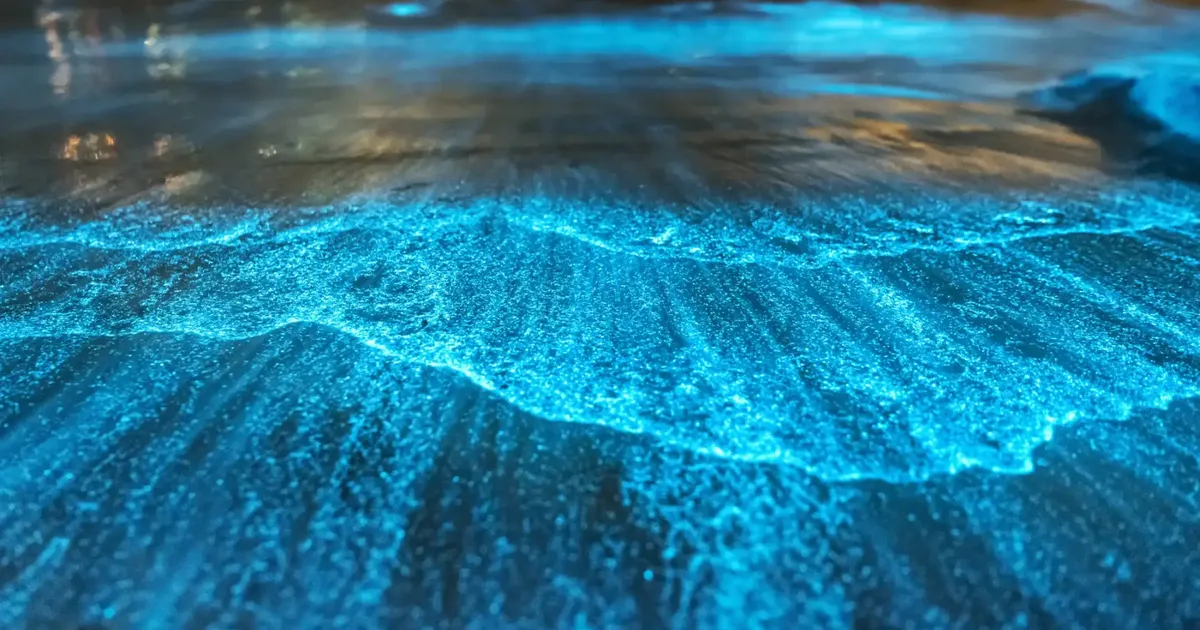
Dip your hand into Mosquito Bay on a moonless night and it comes out dripping blue-green sparks. A fish darts under your kayak and leaves a streak of light like a tiny comet. Puerto Rico is one of the very few places on Earth where water glows like this all year, and it has three of these bays: Mosquito Bay on Vieques, Laguna Grande in Fajardo, and La Parguera in Lajas. They are not equal. One holds a Guinness World Record. One is an easy drive from San Juan. One lets you swim.
For most visitors, the best bio bay in Puerto Rico is Mosquito Bay on Vieques. It is the brightest by a wide margin and the most reliable of the three on a dark night. Laguna Grande in Fajardo is the right pick if you cannot stay overnight on Vieques. La Parguera is for people whose top priority is swimming in glowing water rather than seeing the brightest glow. Whichever you choose, book a night close to the new moon, not the full moon.
- Pick Mosquito Bay (Vieques) if you can spare one night on the island. Guinness World Records lists it as the “Brightest bioluminescent bay,” with up to 700,000 dinoflagellates per gallon. Swimming is banned, and tours stop for the three nights around each full moon.
- Pick Laguna Grande (Fajardo) if you’re based in San Juan and only have one evening. It’s about 1 hr 15 min away by car. Its glow is less reliable: since 2025, visitors have reported sargassum and weak nights, so go expecting a beautiful mangrove paddle that may or may not glow brightly.
- Pick La Parguera (Lajas) if swimming in the glow matters most to you. It is the dimmest of the three and about 2 to 2.5 hours from San Juan. It also closes for three full-moon nights each cycle under a 2023 DRNA order, and the swimming rules there differ between sources, so confirm with your operator.
Check Availability
What makes Puerto Rico’s bioluminescent bays glow?
The glow comes from a single-celled dinoflagellate called Pyrodinium bahamense, a name that translates roughly as “whirling fire.” When the water is disturbed, it gives off a blue-green flash. Puerto Rico’s bays hold these cells at concentrations high enough to see by eye, and 200 to 300 of them could sit on the head of a pin. Guinness World Records says each flash lasts “about one-tenth of a second.” That’s why every paddle stroke sparkles and then instantly fades, and why the glow is so mesmerizing in person and so hard to photograph.
The organisms aren’t rare. The conditions that concentrate them are. According to the Guinness record page and researchers interviewed by PBS NOVA, a year-round bio bay needs a precise recipe:
- A narrow mouth or channel that stops the dinoflagellates from being flushed out to sea. Guinness credits Mosquito Bay’s “narrow mouth” directly.
- Red mangroves around the edge. Bacteria on their roots supply a vitamin (B12) the dinoflagellates need, and decaying mangrove material adds more nutrients.
- Shallow, warm, sheltered water with the right salinity. Heavy rain, a sudden wind shift, or big swings in salinity or temperature can dim a bay quickly.
- Darkness. The light is faint, so moonlight and light pollution compete with it.
“That’s one of the things about bioluminescent bays that is incredible — how many things have to be in sync,” Mark Martin-Bras, director of research for the Vieques Conservation and Historical Trust, told PBS NOVA.
How rare are year-round bio bays?
Very. Discover Puerto Rico, the island’s official tourism site, says there are “only five bioluminescent bays in the entire world” and that three are in Puerto Rico. PBS NOVA’s 2018 reporting counted year-round bays in the Caribbean alone: three in Puerto Rico, plus one each in St. Croix, Jamaica and the Cayman Islands. That’s why you’ll see “5–7 in the world” quoted elsewhere. No one keeps an official global count, so treat any exact number as approximate: a handful. Either way, Puerto Rico has the world’s best concentration of them.
For the deeper question of what it’s like to be in the water with them, and where that’s allowed, read our guide to swimming in Puerto Rico’s bioluminescent bays.
The 3 bio bays at a glance
| Mosquito Bay (Puerto Mosquito), Vieques | Laguna Grande, Fajardo | La Parguera (Bahía Fosforescente), Lajas | |
|---|---|---|---|
| Getting there from San Juan | ~1 hr drive to Ceiba + ~1 hr ferry (or a 25-min flight from San Juan’s Isla Grande airport); overnight strongly advised | ~1 hr 15 min drive via PR-3 | ~2–2.5 hr drive |
| Brightness (typical dark night) | ★★★★★ Brightest, and the most consistent | ★★★☆☆ Can be very good; highly variable since 2017; sargassum reported 2025–2026 | ★★☆☆☆ Dimmest; often faint until you’re in the water |
| Swimming allowed? | No (DRNA ban) | No (DRNA ban) | Generally yes, on licensed boat tours (confirm; see the rules below) |
| Tour types | Kayak, clear-bottom or fully clear kayak, small boat | Kayak (most tours), Para la Naturaleza boardwalk tour (when scheduled) | Motorboat tours (the only bay that allows them), pedal water bikes |
| Typical price (2026, per adult) | Kayak ~$55–$75; clear kayak ~$60–$112; boat ~$100–$128 + $3 DRNA fee | Kayak ~$55–$89; with San Juan transport ~$108–$125 | Boat ~$45–$95 |
| Time on the water | 1–1.5 hrs (boat ~40 min) | ~1.5–2 hrs (includes a 25–30 min channel paddle each way) | Boat ~1–2 hrs |
| Full-moon closure | Yes: night before, night of, night after | No official closure found (tours run; some sell “full moon” paddles) | Yes: three full-moon nights per cycle (DRNA order 2023-02) |
| Logistics difficulty | High (ferry or flight + overnight) | Low | Medium (long drive; best paired with a southwest or Rincón stay) |
| Best for | First-timers who want the “wow,” couples, photographers | Short trips, cruise passengers on long port days, day-trippers from San Juan | Swimmers, west-coast and Rincón visitors, people who don’t want to paddle |
| Our verdict | Best bio bay in Puerto Rico | Best for convenience | Best for an immersive swim |
Prices come from operator sites and booking platforms checked in 2025–2026. They change often and usually exclude tax and fees. Discover Puerto Rico’s own FAQ still lists an older range of “$48 to $76.”
Mosquito Bay, Vieques: is the world’s brightest bio bay worth the trip?
Yes. If you only do one bio bay in your life, make it Mosquito Bay, even though it costs you a night on Vieques. Every other bay gets measured against this one.
What makes Mosquito Bay so bright?
Guinness World Records’ record page reads: “Mosquito Bay on the island of Vieques in Puerto Rico, USA, contains up to 700,000 tiny dinoflagellates per gallon (4.5 litres) of water… Mosquito Bay is the brightest – its narrow mouth prevents the dinoflagellates from being washed out to sea, and decaying mangrove swamps provide them with plentiful food.” Vieques also has very little light pollution, and the bay sits inside a protected reserve, Reserva Natural Bahía Bioluminiscente de Vieques, co-managed by Puerto Rico’s Department of Natural and Environmental Resources (DRNA) and the Vieques Conservation and Historical Trust. The U.S. National Park Service notes that Puerto Mosquito “was designated an NNL in 1980 as it supports the highest concentrations of dinoflagellates,” making it “the brightest and best example of a bioluminescent bay.”
2006 or 2008? You’ll see both years online. The Guinness record page lists the record as 2006, and Discover Puerto Rico agrees: Mosquito Bay “was recognized in 2006 by Guinness World Records as the brightest bioluminescent bay in the world.” Many Vieques operators say “2008,” most likely because the record appeared in the Guinness World Records 2008 book edition.
You’ll also see claims of “1–2 million” or more dinoflagellates per gallon. Those come from post-hurricane sampling reported by tourism and media sources, not from Guinness, whose figure is “up to 700,000 per gallon.”
Did Hurricane María kill Mosquito Bay’s glow?
For a while, yes. Then it came back stronger. Hurricane María struck on September 20, 2017. PBS NOVA reported that wind and rain pushed water out of the bay, lowered its salinity and wrecked the surrounding mangroves, and “the water went dark.” Vieques operator Abe Velasquez told CNN-syndicated reporters that he stopped bay tours for nearly nine months. The same report cites sampling of about 100,000 dinoflagellates per liter in 2017. Numbers then “spiked to nearly 600,000 Pyrodinium bahamense per liter in June 2018,” and later settled at levels still above pre-storm figures. Discover Puerto Rico describes the concentration as having “inexplicably doubled” after María.
Current status (October 2026): recent visitor reports and operators describe Mosquito Bay as bright and healthy on dark nights. No one publishes a live brightness index, though. Every bio bay can dim after heavy rain or storms, so ask your operator about conditions in the week before you go, especially during hurricane season, June through November.
How do you get to Mosquito Bay?
You have to get to Vieques first. Discover Puerto Rico lists two routes: a flight of about 25 minutes from San Juan’s Isla Grande airport, or a ferry from Ceiba on the east coast. Discover Puerto Rico says the ferry takes “about 45 minutes,” but the operator, Puerto Rico Ferry, tells travelers to allow about one hour. Flights from Ceiba take about 10 minutes (Vieques Air Link and Cape Air).
Ferry facts that catch people out (checked October 2026):
- The fare is still $2, for now. The adult fare is $2 each way. A non-resident increase to $11.25 each way has been postponed several times, most recently (in May 2026) to December 31, 2026, so some sites still wrongly say it took effect in May. Check the live checkout price.
- Arrive one hour early. Check-in closes 10 minutes before departure.
- All sales are final. You can transfer a ticket twice, up to one hour before departure.
- No rental cars on the ferry. Rent a car on Vieques instead, and book it early.
- Every carry-on item needs its own ticket on the island routes.
Stay overnight. Tours finish well after dark, and as one long-running Vieques operator (Abe’s Snorkeling) puts it, the last ferry or flight usually leaves before your tour ends. A same-day round trip is sometimes possible with an early tour and a pre-booked taxi to the ferry, but it’s a gamble on a late sailing that may not run. Most tours meet in or near Esperanza, where many guesthouses are, then shuttle you down a rough dirt road to the launch.
Full logistics, including flights, parking at Ceiba and whether a same-day trip can work, are in our guide to getting to Vieques, and our Mosquito Bay tours page compares the Vieques departures side by side.
What tours are allowed in Mosquito Bay?
Only DRNA-permitted operators may take guests into the bay. Abe’s Snorkeling’s FAQ says the permitted window is 6 p.m. to midnight. Jet skis and gas motorboats are banned. You’ll choose between:
- Standard kayak: usually about $55–$75 per person. It’s the classic experience and the closest you get to the water. On GetYourGuide, the Vieques Bioluminescent Bay Kayak Night Tour with Guide is $55 (4.4/5 from more than 45 reviews), and it guarantees your return to the ferry after the first tour of the night.
- Clear-bottom or fully clear kayak: from about $60 to about $112 for small-group fully clear kayaks on booking platforms (Mosquito Bio Bay Tours’ clear-bottom tour, for example, is about $65 for 1.5 hours, ages 4+). You can watch the glow swirl beneath you. Our pick is the Vieques Bioluminescent Bay Full Clear Kayaking tour from Esperanza at $112 (4.7/5 from more than 100 reviews); the Vieques Bioluminescent Bay Night Clear Kayak Tour is cheaper at $61 but rated lower (4.1/5).
- Small boat: Isla Nena Bio Bay Boat Tours, for example, runs an electric boat for about 40 minutes, roughly $100–$110 plus a $3 cash DRNA fee, with small groups. A boat is the best option for young kids, older travelers and anyone with limited mobility. Some reviewers call it pricey for the time on the water, and they have a point. On GetYourGuide, the Vieques Bioluminescent Bay Boat Tour uses a small catamaran ($105, 4.5/5 from more than 50 reviews).
Mosquito Bay rules you must know
- No swimming. It’s prohibited under DRNA regulations. Operators who allow it are breaking the law.
- No tours the night before, the night of, or the night after each full moon. This is DRNA policy, which permitted operators state publicly.
- Licensed operators only. Unauthorized boats can be confiscated.
- No DEET bug spray, sunscreen or lotions on skin that touches the water. These products harm the dinoflagellates.
Laguna Grande, Fajardo: is the bio bay closest to San Juan worth it?
Yes, as long as you know what you’re getting. It’s the easiest bio bay in Puerto Rico to reach. The mangrove paddle is genuinely beautiful, and on a good dark night the glow is lovely. But its brightness has been the least predictable of the three since 2017. If seeing the glow is non-negotiable for you, Vieques is the safer bet.
Why is Laguna Grande a “bioluminescent lagoon”?
Because it really is a lagoon. Discover Puerto Rico points out that Laguna Grande is “the only one of the three that’s not technically a bay.” A long, narrow mangrove channel leads into it, and PBS NOVA notes it’s partly sheltered by the reserve’s coral reef. It sits inside Reserva Natural Cabezas de San Juan, which Para la Naturaleza (formerly the Conservation Trust of Puerto Rico) owns and manages. The land was protected in 1975, opened to the public in 1991, and is home to El Faro, a lighthouse first lit in 1882. If you’ve been searching “bioluminescent lagoon Puerto Rico,” this is the place.
How bright is Laguna Grande now?
It varies a lot, and you should take that seriously. After Hurricane María, PBS NOVA reported in September 2018 that Laguna Grande “isn’t glowing much at all.” Para la Naturaleza’s marine biologist Leonor Alicea said dinoflagellate numbers were about the same as before the storm, but “we don’t know why it’s not glowing.” Reviews from 2025 and 2026 are mixed. Some nights are described as “terrific.” Other reviewers say sargassum (floating seaweed) “limit[ed] bioluminescence visibility,” or that they “did not get to see the bioluminescence,” including a June 2026 review. Kayaking Puerto Rico, one of the longest-running operators, warns that large amounts of sargassum can appear depending on the season. Good operators now email guests ahead of time when the glow is weak and offer a refund or a new date. Some use tarps over the kayak to create darkness so you can see the faint flashes.
Laguna Grande is also less dark than Vieques. Visitors note lit buildings on the hills around Fajardo, and a bright moon washes out the glow faster than at Mosquito Bay.
What’s the Laguna Grande kayak tour like?
Tours launch from Las Croabas (Kayak Village) at sunset and after dark. Most run about 2 hours, including a safety briefing. You paddle a two-person kayak 25–30 minutes through a dark, narrow mangrove channel, following the glow stick on the kayak ahead. Then you float in the open lagoon while a guide explains the ecology, and paddle back.
- Price: about $55 (Kayak-PR) to $70 plus tax (Kayaking Puerto Rico) to $79–$89 on booking platforms. The tour we feature, the Fajardo Bioluminescent Lagoon Kayak or Full Moon Kayak Tour, is $85 (4.6/5 from more than 270 reviews), and the Fajardo Bio Bay Kayak Tour from Kayak Village is $72 (4.4/5 from more than 300 reviews). With round-trip transport from San Juan, expect about $108–$125, as on the San Juan Bioluminescent Laguna Grande Bay Night Kayaking tour ($125, 4.4/5 from more than 90 reviews).
- Ages: typically 6+.
- Effort: operators rate it “moderate” or “moderate to high.” Weight limits apply; Kayak-PR caps it at 280 lb per person and 400 lb per kayak.
- Crowds: several companies share one channel. Expect some “bumper boats” at peak times.
- Days: some operators don’t run every day of the week, so check the calendar for your date.
Without a kayak: Para la Naturaleza runs a “Bioluminiscencia y contaminación lumínica” tour that takes you by trolley to a boardwalk over the water. It’s listed at $24 per adult and $14 per student, but no dates were scheduled when we checked on October 1, 2026, and Para la Naturaleza says it “cannot guarantee” visibility.
See our complete Laguna Grande guide for operators, the drive and getting back to San Juan, and the Laguna Grande tours page for every Fajardo departure we cover.
La Parguera, Lajas: can you really swim in this bio bay?
Usually, yes. That’s the whole point of going. La Parguera is the only one of Puerto Rico’s three bioluminescent bays where swimming is generally allowed, according to Discover Puerto Rico’s La Parguera profile. It’s also the only one where motorboats can enter. In exchange, it’s the dimmest of the three.
How bright is La Parguera?
It’s dim compared with Vieques and Fajardo. Expect faint sparkles more than a sheet of blue light. The Puerto Rico Travel Guide (puertoricothingstodo.com, updated June 3, 2026) says the brightest its writers have seen there is “faint emerald green,” and that “most days, you must jump in to see or experience any bioluminescence.” The bay has a long, documented decline. Scientists Brenda María Soler-Figueroa and Ernesto Otero (2016, Journal of Experimental Marine Biology and Ecology, vol. 483) link drops in brightness to swings between the glowing Pyrodinium bahamense and a non-glowing dinoflagellate, Ceratium furca. Rainfall and nutrient runoff drive those swings. Earlier dredging at the bay entrance has also been tied to dramatic dimming. An ArcGIS StoryMap case study, “Bio Lights Losing Brightness,” reports that local boat captains are switching from two-stroke engines, “which leak oils through the exhaust,” to four-stroke engines.
How do you visit La Parguera’s bio bay?
Book with a licensed operator from the La Parguera waterfront in Lajas.
- Drive: about 2–2.5 hours from San Juan (Discover Puerto Rico), or about 1 hour from Rincón.
- Tour types: boat tours (about 1–2 hours), sunset-plus-bio-bay combos (about 2–3 hours) and pedal water bikes. Our picks: the La Parguera Sunset and Biobay or Late Night Biobay Cruise ($65, 4.8/5 from more than 550 reviews), the La Parguera Bioluminescent Bay Boat Tour ($60, 4.6/5 from more than 290 reviews), and the La Parguera Bioluminescent Bay Water Bike Tour ($79, 4.8/5 from more than 100 reviews). If you’re coming from San Juan without a car, the From San Juan: La Parguera Glowing Bio Bay Boat Tour includes transport ($199, 4.8/5 from more than 110 reviews).
- Price: Discover Puerto Rico says tours “generally start around $45–$95 per person.” Aventuras Tropicales, for example, lists a 1 hr 15 min boat tour at $78.
- Full-moon closure: DRNA Administrative Order 2023-02 closes the bay for three full-moon nights in each lunar cycle. It took effect immediately, with the first closure on June 18–20, 2023.
The swimming rules conflict. Discover Puerto Rico’s La Parguera page says swimming is “generally permitted” and “allowed on most nights.” But Discover Puerto Rico’s own bio-bay FAQ says swimming is “not allowed in any of the bio bays.” At least one La Parguera pedal-boat operator also lists swimming in the bay as prohibited under DRNA requirements. In practice, swimming happens from licensed boats, in life vests, on most nights. Treat it as operator-dependent and never guaranteed, and confirm when you book.
Read more on the La Parguera tours page.
Which bio bay should you choose?
- You want the brightest glow → Mosquito Bay. It’s worth the overnight. Book a new-moon date early, because popular dates sell out.
- You’re in San Juan for a short trip with no overnight → Laguna Grande. Pick a sunset or early tour so you see the mangroves in the last light, and choose an operator that warns you about sargassum or low glow in advance.
- You want to swim in glowing water → La Parguera. Pair it with a southwest or Rincón stay rather than a 5-hour round trip from San Juan.
- You’re traveling with kids → Mosquito Bay by boat, or a two-person kayak with a parent. Some Vieques kayak tours take kids from age 4. Laguna Grande kayak tours are usually 6+, and the channel paddle is real work for small arms.
- Someone in your group has limited mobility → a Vieques boat or a La Parguera motorboat. In Fajardo, some operators adapt kayak tours for people with physical challenges, with more supportive seating and towing, and Peniel Access Eco Tours has offered an adaptive kayak for wheelchair users. Call ahead to confirm.
- You’re a cruise passenger → Laguna Grande, and only on the ship’s own excursion if your all-aboard time is before about 11 p.m. One Cruise Critic poster on a ship tour left the pier at about 4:30 p.m. and was back at about 10:15 p.m. Others report San Juan traffic stretching the return to two hours. Vieques isn’t realistic in a port day.
- You’re a photographer → Mosquito Bay. It has the darkest skies and the strongest signal. You’ll still need a real camera (see below).
- You’re on a budget → Laguna Grande with your own rental car. Several reviewers found a rental car cost about half as much as transfer services.
Comparing individual tours? Our guide to which bio bay tour is right for you works through bay, hull and group, and the Vieques vs Fajardo comparison covers the choice most people actually face.
When is the best time to visit Puerto Rico’s bio bays?
The best time is the darkest possible night: within a few days of the new moon, after the sky is fully dark, with no recent heavy rain. Season matters much less than the moon.
Moon phase: the single biggest factor
- New moon is best. Moonlight competes with the glow. In Puerto Rico time, the remaining new moons of 2026 fall on October 10, November 9 and December 8, and the full moons on October 26, November 24 and December 23. Check a moon calendar for your exact date.
- Full moon is worst. Mosquito Bay and La Parguera close for the night before, the night of, and the night after. You can still see some glow under a full moon, especially with tarps or after a late moonrise, but it’s far weaker. At Laguna Grande, where tours keep running, the Fajardo full moon kayak tour is sold as a moonlit mangrove paddle rather than a light show.
- Check moonrise, not just the phase. After the full moon, the moon rises later each night, by roughly an hour each time. A few nights after the full moon, an early tour can finish before the moon is up.
Weather, rain and season
Rain doesn’t stop the glow, and raindrops even make the surface sparkle. But heavy or prolonged rain lowers salinity and stirs up the water, and the bays can stay dim for days afterward. Clouds help by blocking moonlight, though in Fajardo they also reflect city glow. Hurricane season runs June to November, when storm-related dimming and cancellations are most likely. Some Laguna Grande guides and reviewers say summer and fall glow brighter than winter there; that’s anecdotal, but it is consistent.
Time of night
The first tour around sunset gives you a twilight paddle through the mangroves, but the glow gets stronger once it’s fully dark. The later tour, around 8–8:30 p.m., is darker. If the glow is your priority, take the later slot in a new-moon week.
Plan your dates with our full guide to the best time to visit Puerto Rico and the bio bays, which includes a new-moon and closure calendar through 2027.
What should you expect on a bio bay tour?
Expect 1.5 to 2.5 hours, near-total darkness, gentle paddling and a glow that’s magical but subtle. It looks more like scattered sparks than the neon photos online. Discover Puerto Rico’s own tip list says it plainly: don’t “rely on photos — the glow rarely shows up.”
- Before: check in about 30 minutes early, get a safety briefing and kayak instructions, and put on a life vest. Most tours don’t require experience.
- During: at Laguna Grande you’ll paddle a dark mangrove channel and follow a light on the kayak ahead. At Mosquito Bay you launch straight into the bay. Your guide will tell you to sweep your hand through the water. Each stroke leaves a glowing trail, and fish leave streaks. Look up too: the stars over Vieques are spectacular.
- After: you’ll be damp, and possibly muddy from the launch area.
What to bring and wear
- Quick-dry clothing, or a swimsuit with a light layer over it
- Water shoes or sandals that strap on, not flip-flops
- A towel and a dry bag for your phone and keys
- Water, plus cash for the $3 DRNA fee in Vieques or for tips
- Bug protection without DEET: long sleeves and pants are the best option, and mosquitoes can be fierce at Laguna Grande. If you must use repellent, apply it before the tour and keep it off your hands and forearms. Don’t put sunscreen or lotion on skin that will touch the water.
- Glasses straps, if you wear glasses
Can you photograph the bio bay?
Not with a phone, realistically. Each flash lasts about a tenth of a second and is very faint. Most smartphones record black water, and any flash wipes the glow out entirely. Phone night modes sometimes catch a hint if you hold very still.
If you want to try with a real camera:
- Use manual mode, shoot RAW, and use your widest aperture (f/1.4–f/2.8).
- Set a high ISO (3200–6400 or more) and exposures of several seconds or longer. One photographer got usable shots at Mosquito Bay with 13–15 seconds, f/2.8 and ISO 1600 (PuertoRicoDayTrips.com).
- Brace the camera on the boat. A boat is far more stable than a kayak.
- Turn off all flash and screen lights, and don’t blind the people around you.
- Know this going in: most “glowing kayak” marketing photos are long exposures, often with extra lighting. Put the camera away for part of the tour. You’ll remember it better.
Rules and conservation: how do you protect the bays?
The bays are fragile, and the rules are why Mosquito Bay still glows.
- No swimming at Mosquito Bay or Laguna Grande. DRNA rules prohibit it. At La Parguera, swim only from a licensed boat that allows it.
- Book licensed, permitted operators only. Don’t paddle in on your own. Mosquito Bay is open only to permitted companies from 6 p.m. to midnight, and the dirt access road is rough.
- Respect the full-moon closures at Vieques and La Parguera.
- Keep DEET, sunscreen, lotions and oils out of the water.
- Don’t scoop, bottle or take water or organisms, and don’t touch the mangroves.
- Keep lights low. No flash, and dim your screens.
Is a bio bay tour safe? Accessibility, age limits and safety
Yes, these are low-risk, guided activities. Pyrodinium bahamense in Puerto Rico’s bays is non-toxic, according to Discover Puerto Rico. The main risks are ordinary paddling ones: tipping a kayak in shallow water, collisions in a crowded channel, fatigue, and slipping at muddy launches.
- Age: kayak tours are typically 6+ in Fajardo and 4+ on some Vieques tours. Boats often take all ages.
- Fitness: you need moderate fitness for the Laguna Grande channel. The Mosquito Bay paddle is shorter.
- Weight limits: often around 280 lb per person and 400 lb per kayak, though some operators set lower limits. Ask before you book.
- Swimming at La Parguera: wear the life vest, stay close to the boat, and skip it if you’re nervous in dark open water.
- Accessibility: Vieques boats and La Parguera motorboats are the most accessible. Ask about adaptive kayak options in Fajardo.
How much does a bio bay tour cost, and how do you save money?
Expect about $55–$90 for a kayak tour, $100–$130 for a boat at Vieques, and $45–$95 for a La Parguera boat tour (2026 prices). Add ferry or flight costs and a night’s lodging for Vieques.
Ways to save:
- Drive yourself to Fajardo instead of paying for a San Juan transfer package. Transfers add about $40–$55 per person.
- Book direct with the operator. Booking platforms often add markups.
- Take the ferry, not the flight, to Vieques. It’s $2 each way for now, but a non-resident fare of $11.25 is due from December 31, 2026.
- Ask about free cancellation. Many platform listings offer a full refund up to 24 hours before. Puerto Rico Ferry tickets are non-refundable.
- Make it a combo: El Yunque plus bio bay packages can beat booking the two separately. Kayaking Puerto Rico’s runs about $165 with transport; on GetYourGuide, the El Yunque Rainforest & Bio Bay Kayak Combo is $165 (4.5/5 from more than 160 reviews).
Booking advice: how far ahead, and what to check
- Book new-moon dates early, especially for Mosquito Bay over holidays and spring break. Some operators say peak dark-moon dates can sell out 2–3 months ahead.
- Confirm the operator holds a DRNA permit, and ask where exactly you’ll meet. One-star reviews often involve wrong meeting points.
- Read the weather and low-glow policy. The best operators warn you in advance and offer a refund or rebooking.
- Check the tour time against your ferry, flight or cruise departure.
- Ask about kayak versus clear kayak versus boat, group size, and age and weight limits.
Frequently asked questions
Which bio bay in Puerto Rico is the brightest?
Mosquito Bay on Vieques. Guinness World Records lists it as the “Brightest bioluminescent bay,” with up to 700,000 dinoflagellates per gallon.
Which bio bay is closest to San Juan?
Laguna Grande in Fajardo, about 1 hour 15 minutes by car via PR-3.
Can you swim in the bio bays?
Not at Mosquito Bay or Laguna Grande, where DRNA bans it. At La Parguera, swimming is generally allowed from licensed boats on most nights, but it’s operator-dependent, so confirm when you book.
Is the bio bay worth it?
Yes, if you go on a dark night and set your expectations right. Mosquito Bay is reliably spectacular. Laguna Grande and La Parguera can be underwhelming on bad nights.
What’s the best moon phase for the bio bay?
New moon, or the few nights either side of it. Also check moonrise time: an early tour before moonrise works well even mid-cycle.
Can you see the bioluminescence during a full moon?
Faintly, at best. Mosquito Bay and La Parguera close for the night before, the night of, and the night after each full moon.
Can you photograph the bio bay?
Phones rarely capture it. You need a manual camera, a wide aperture, high ISO and exposures of several seconds.
How much does a bio bay tour cost?
About $55–$90 for kayaks, $100–$130 for Vieques boats, and $45–$95 for La Parguera boats (2026 prices).
Is a bio bay tour safe?
Yes. The organisms are non-toxic and tours are guided, with life vests. The main risks are tipping over and getting tired.
Can kids go on a bio bay tour?
Yes. Kayak minimum ages are usually 4 to 6, and boats often take all ages.
What if it rains?
Light rain is fine and even sparkly. Heavy rain can dim the bays for days, and operators may cancel or reschedule.
Can I do Mosquito Bay as a day trip from San Juan?
Rarely. Tours end after the last reliable ferry or flight, so plan to spend one night on Vieques.
Can I use bug spray on a bio bay tour?
Avoid DEET and keep all repellent and sunscreen off skin that touches the water. Long sleeves are the better solution.
See the Water Light Up
Paddle into Laguna Grande with the operator 273 guests rated 4.6/5 — small groups, a full safety briefing, and free cancellation up to 24 hours before.
Check Availability & Book