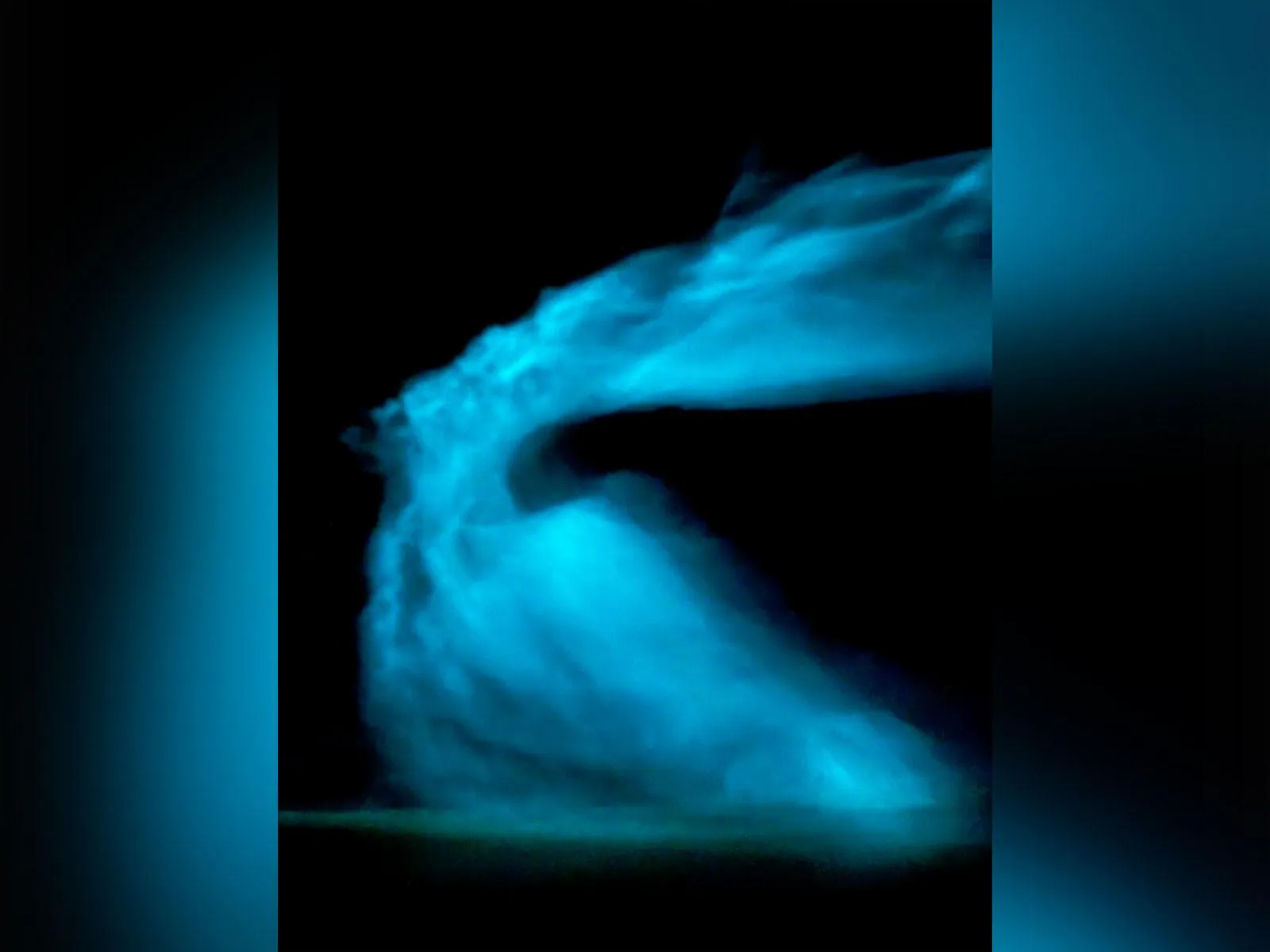
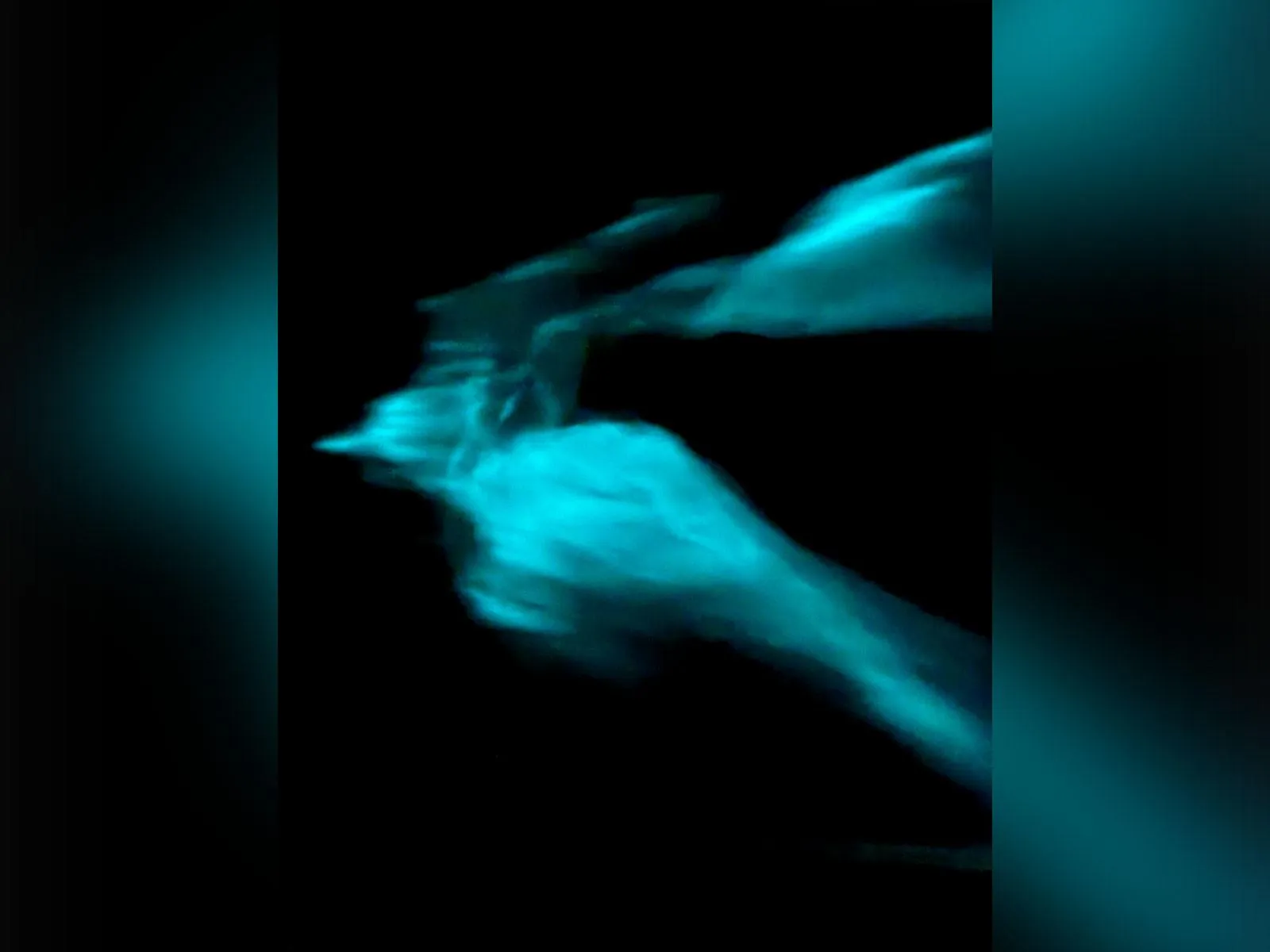
Mosquito Bay, on the south coast of Vieques, is the brightest bioluminescent bay
in the world. That is not marketing — Guinness World Records recognised it as
such in 2006, and the reason is structural. A narrow S-shaped entrance traps the
organisms inside, the mangroves ringing the bay feed them, and the result is a
concentration of up to 700,000 dinoflagellates in a single gallon of water.
The difference against Fajardo and La Parguera is visible rather than marginal.
If you have seen a bio bay before and found it underwhelming, this is the one
that changes your mind.
The part that goes wrong is the ferry, not the bay
Vieques is an island off Puerto Rico’s east coast, reached only by ferry from
Ceiba or a short flight. That single fact is responsible for nearly every
disappointed Mosquito Bay story you will read.
The last ferry off Vieques leaves in the early evening — before a bio bay tour
finishes. There is no way to take an evening tour and get back to the main island
the same night. One operator we list requires proof of at least one night’s
accommodation on Vieques before it will accept a booking, and states plainly that
it gives no refund if you turn up without a bed.
Operators also take no responsibility for ferry delays, cancellations, weather or
capacity limits, because they have no control over any of it. One of them
recommends in its own listing that you arrive on the island at least a day before
your tour. That is the right plan. Mosquito Bay is a two-day trip, and treating it
as a day trip from San Juan is the single most reliable way to lose the booking.
Three ways onto the bay
Because the bay is small and enclosed, you reach the glow within minutes of
launching. There is no long channel paddle as there is at Fajardo, which is why
tours here run forty minutes to an hour rather than three.
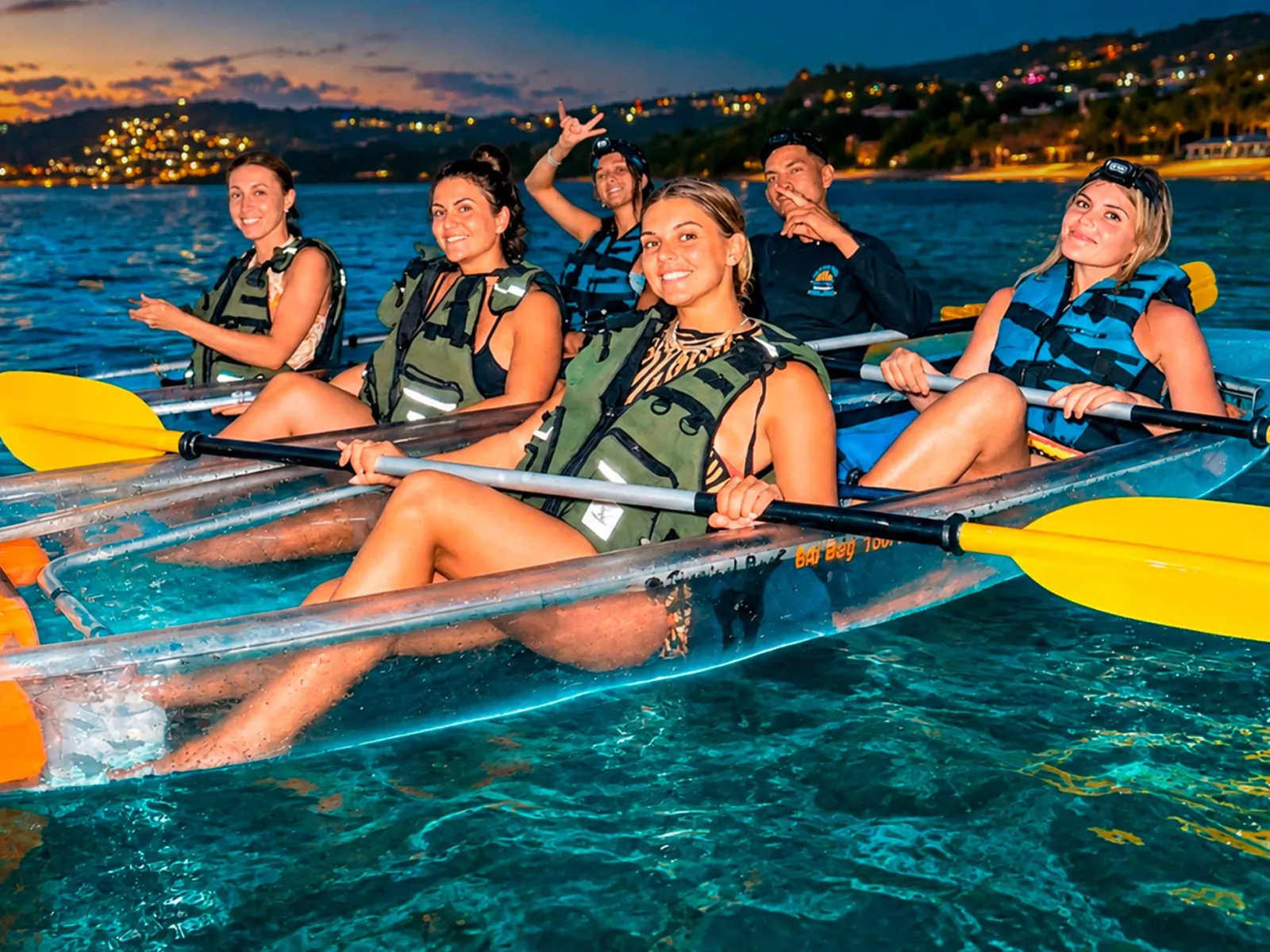
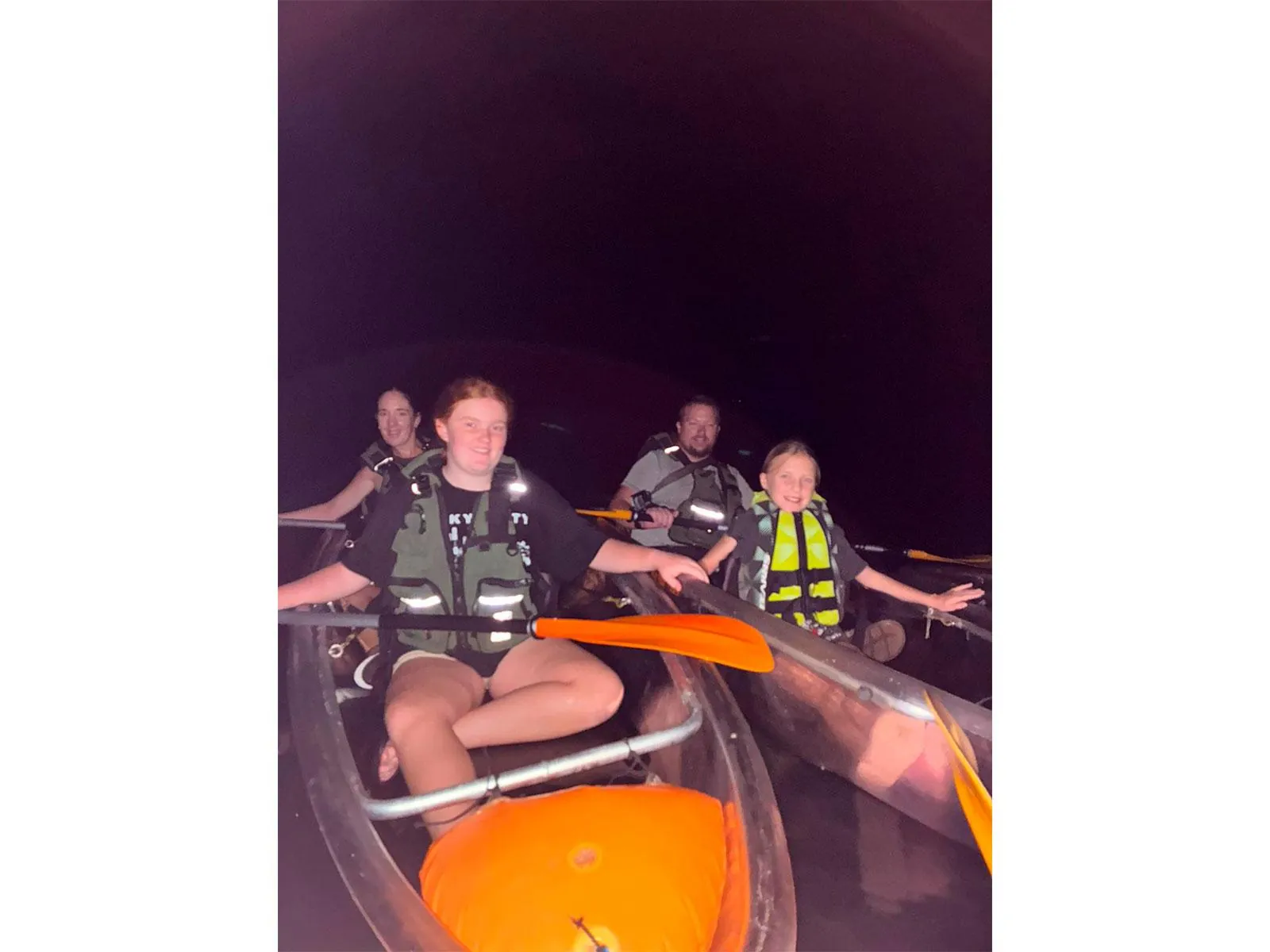
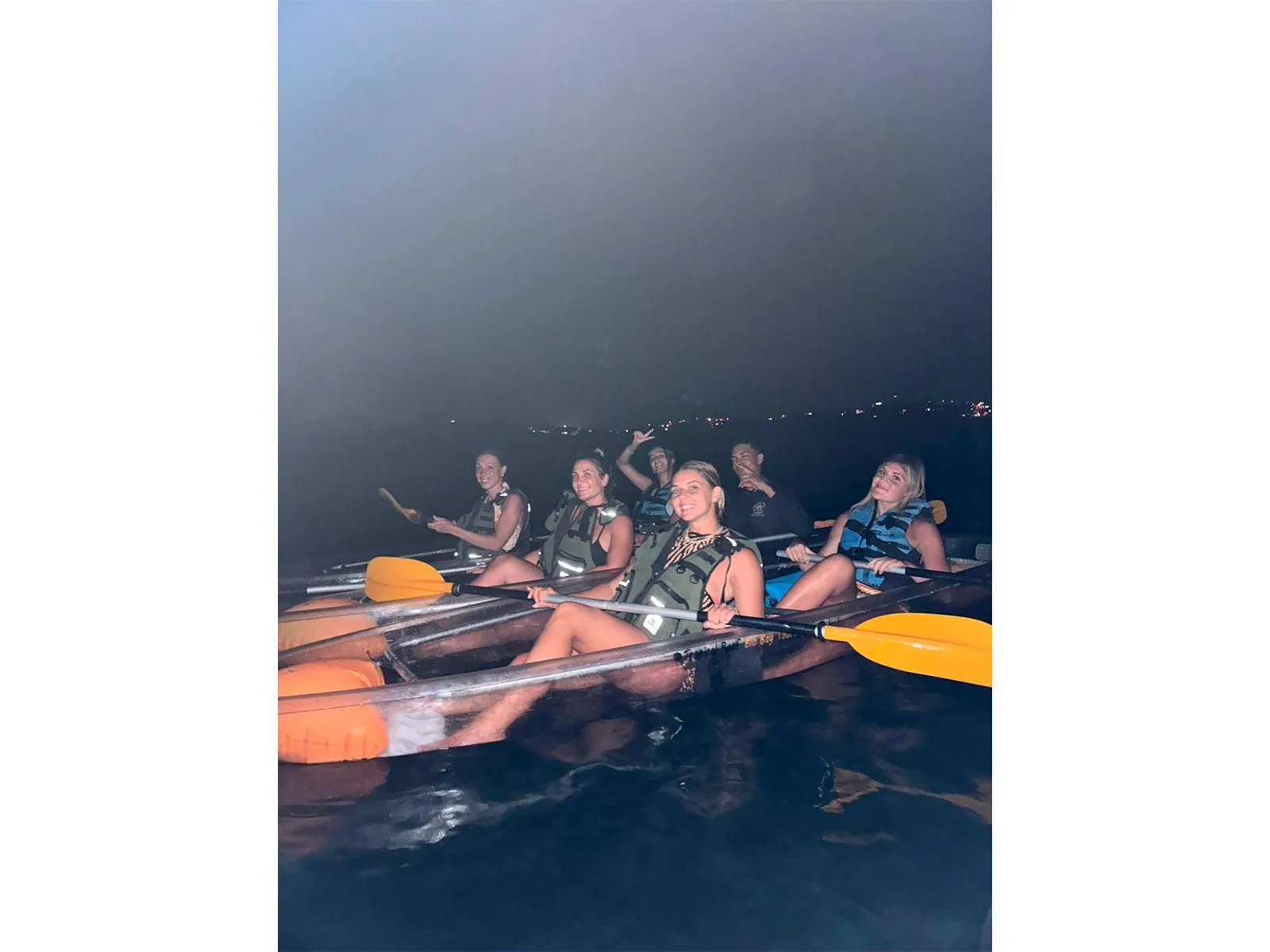
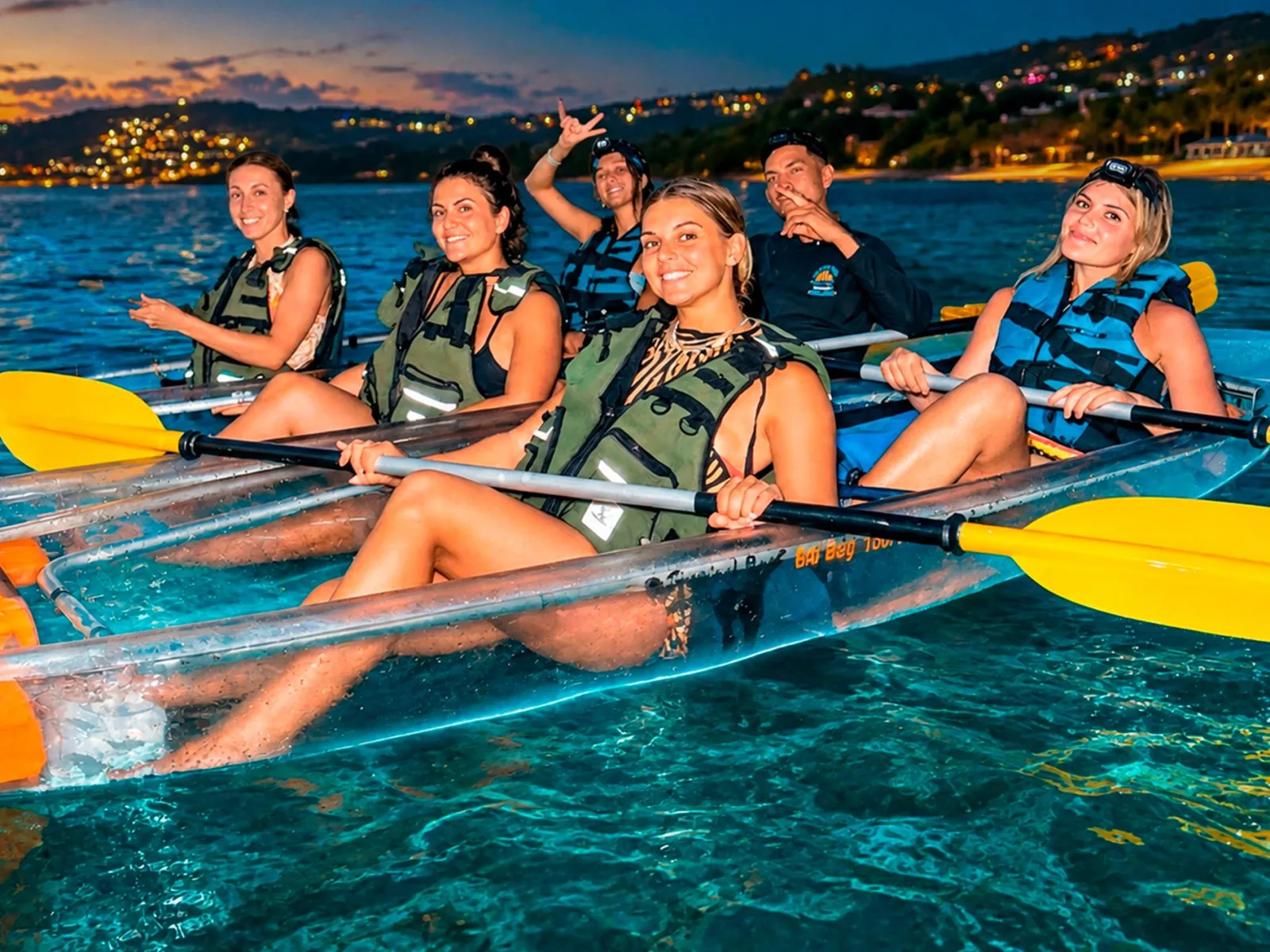
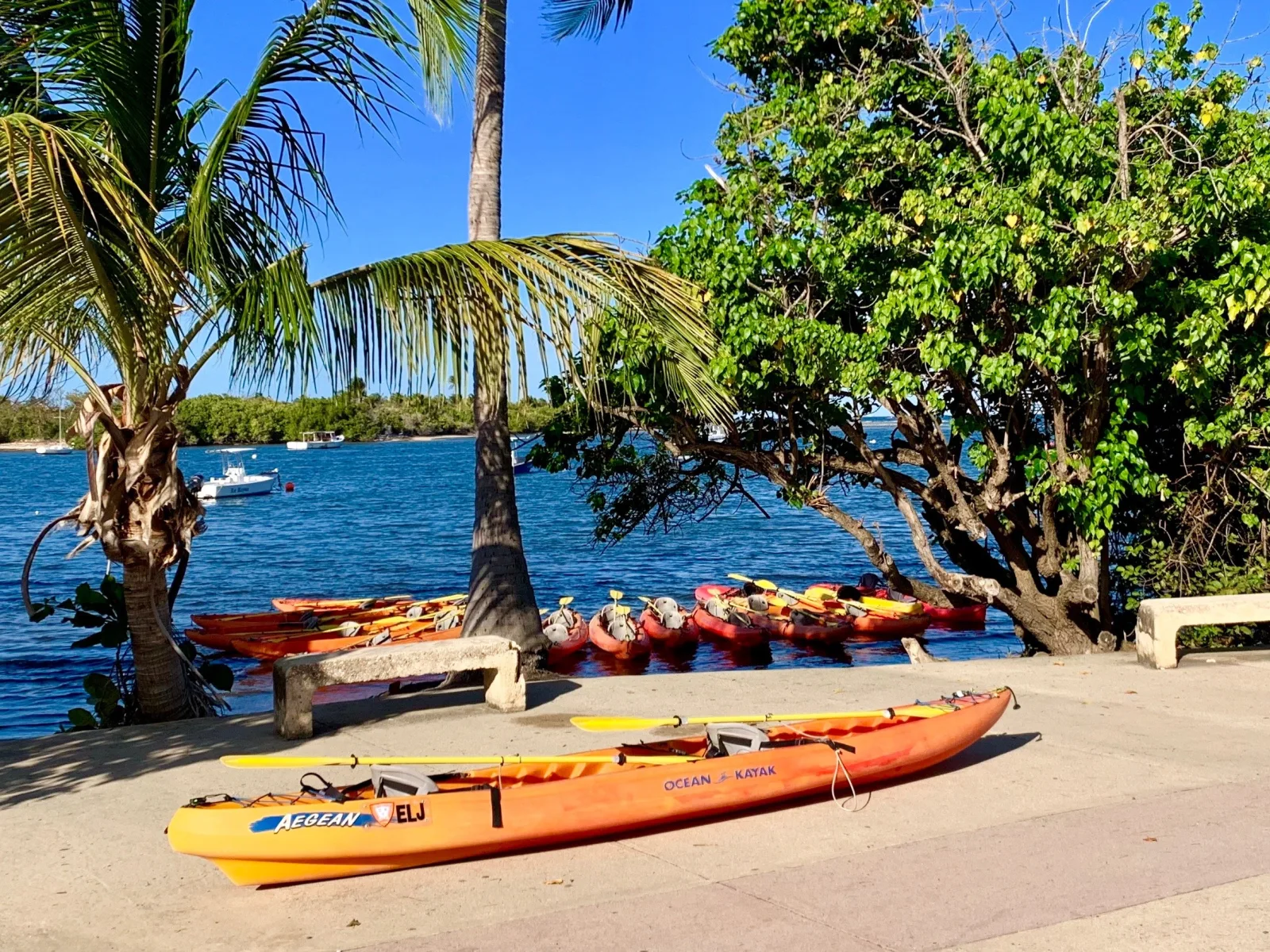
The transparent kayak tour
at $55 is the cheapest way onto the bay of anything on this site. A clear hull
matters more here than elsewhere: on water this bright, the glow appears beneath
you as well as around the paddle blade. Guests on the 7:00pm departure get a
guaranteed lift back to the ferry port afterwards — the only Vieques tour we
list whose inclusions mention it.
The transparent canoe
at $57 is an open shared hull where you sit facing each other rather than in
line. It accepts children from age 2, the lowest minimum age of any tour we list,
and includes basic liability insurance.
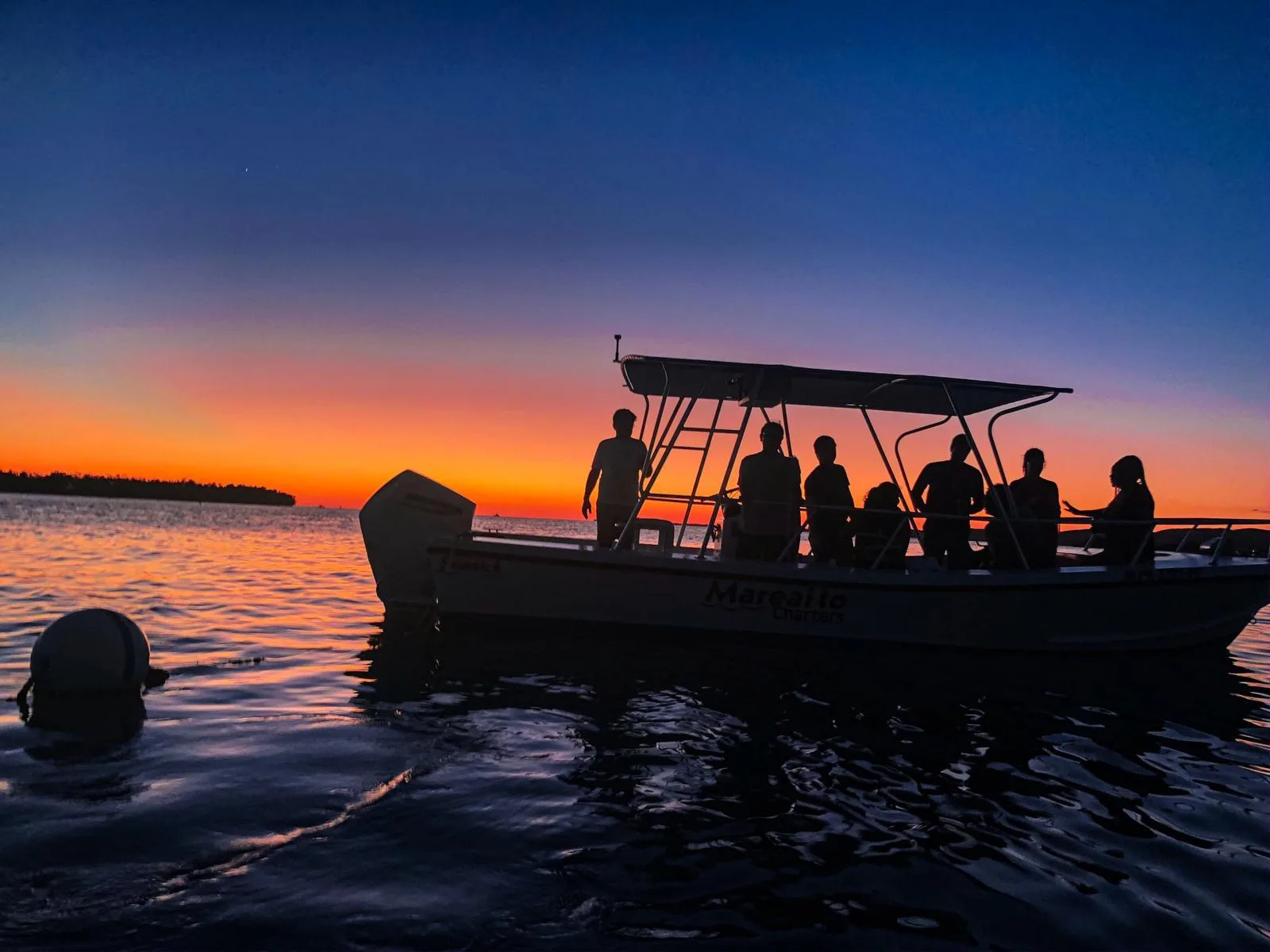
The electric catamaran at $105
removes the paddling entirely. An air-conditioned van collects you in Esperanza
and runs you to the bay, where a 24-foot electric boat takes over. Near-silent,
no fuel on a protected bay, and no fitness, height or weight requirements beyond
being able to board. For older travellers, or anyone a kayak rules out, this is
the way onto Mosquito Bay.
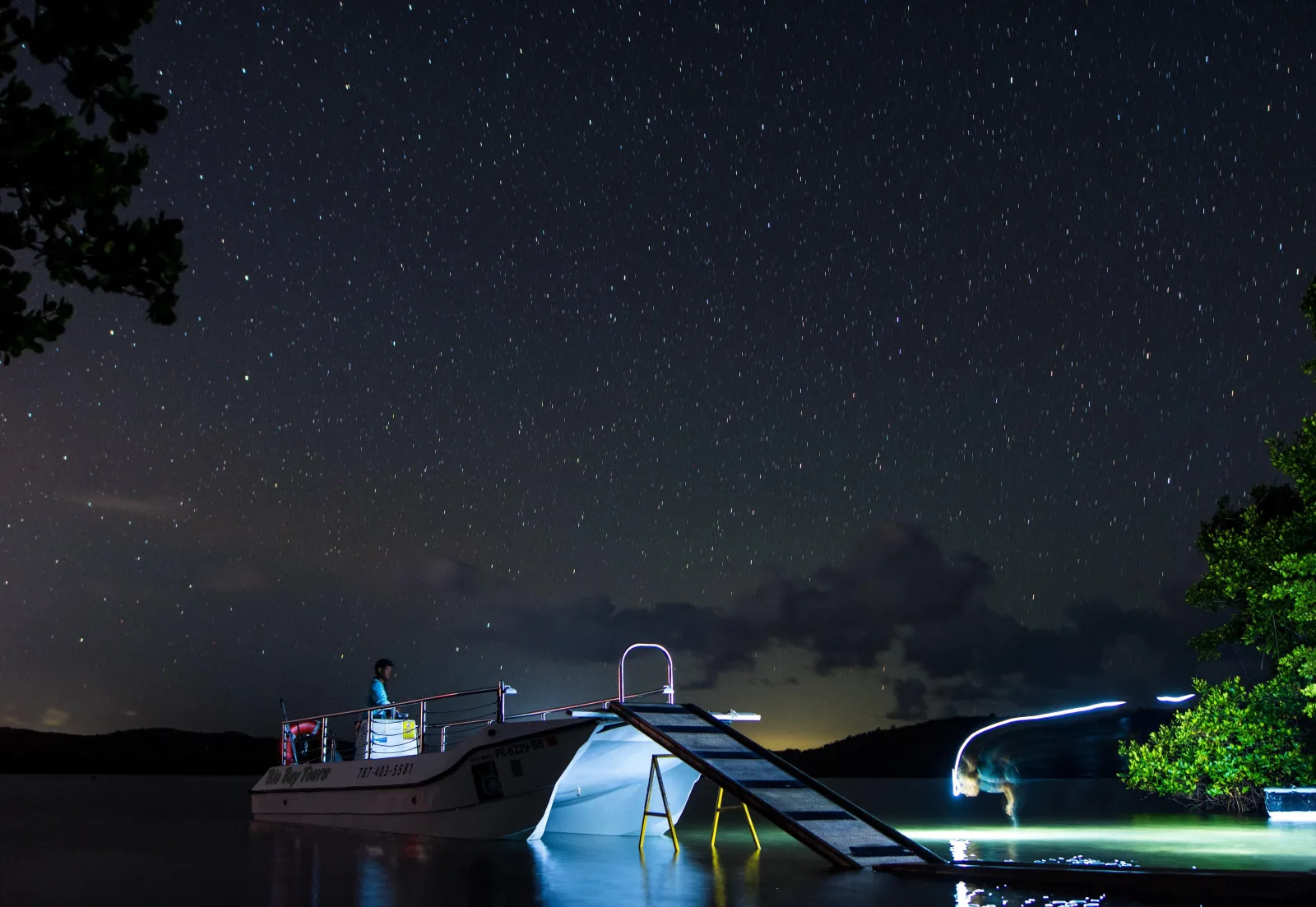
Your photographs will not work
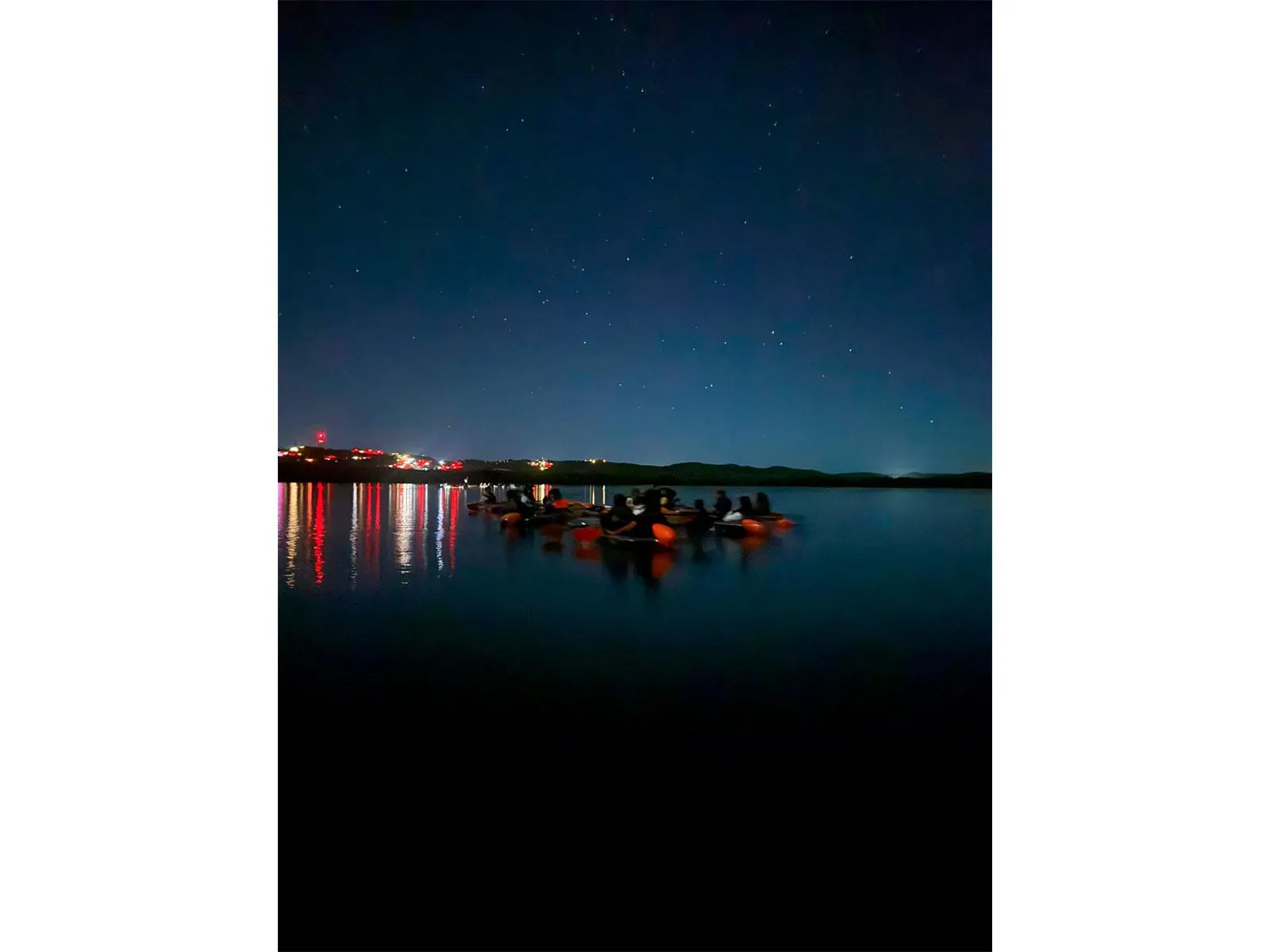
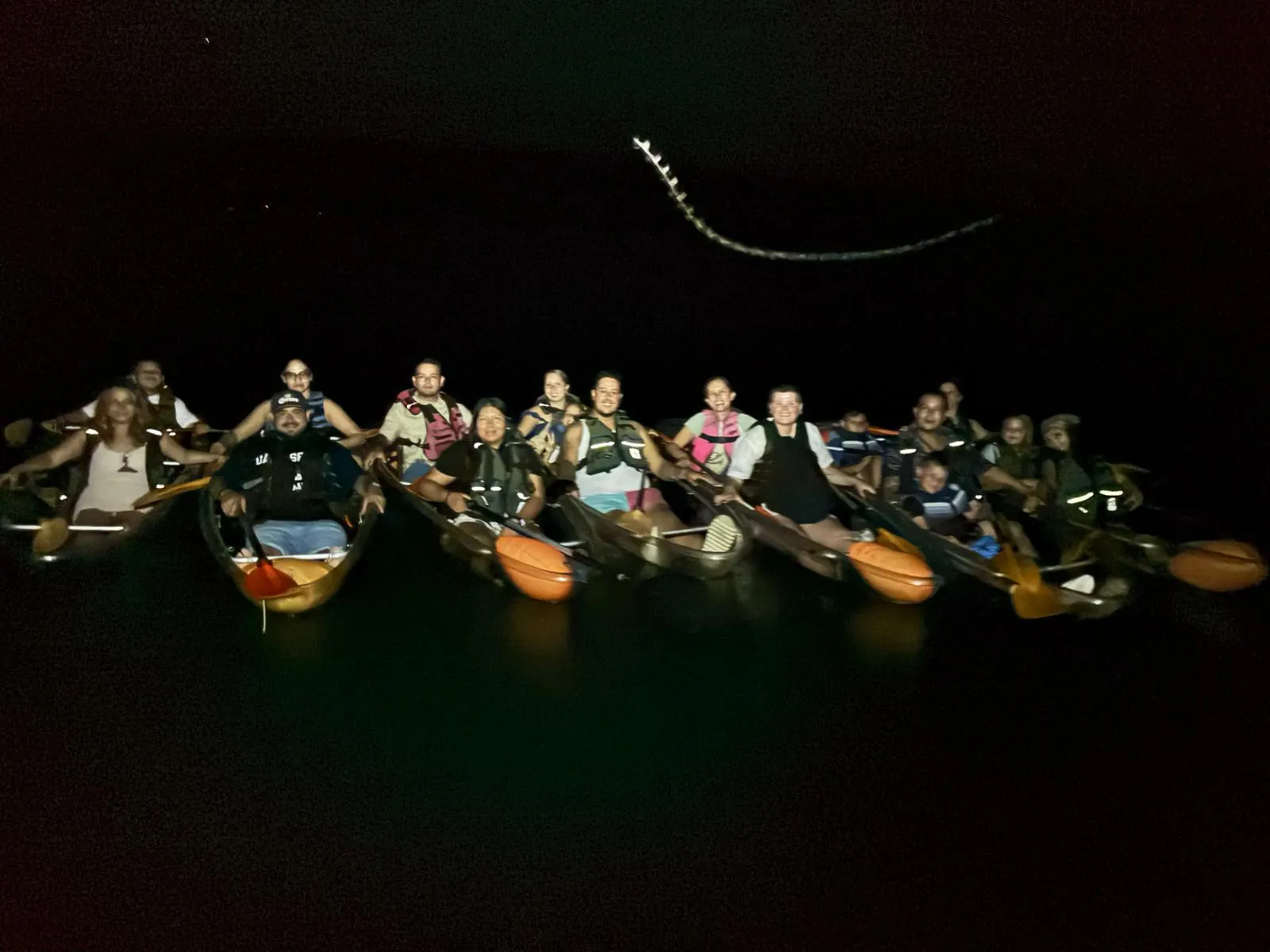
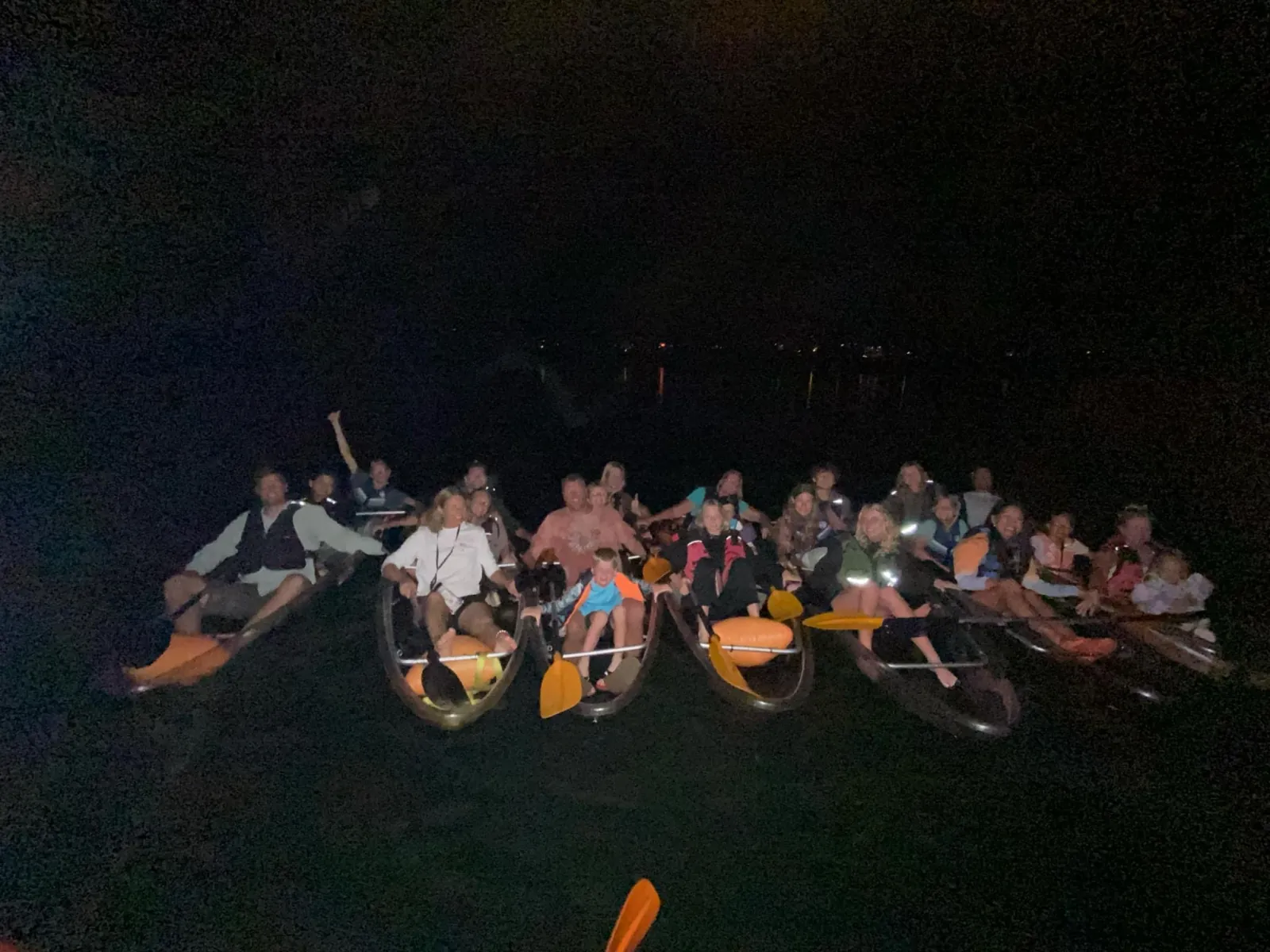
Worth stating before you spend the trip trying. The light is far too dim for
handheld photography, and the catamaran operator says so in its own listing: no
cellphone, DSLR or mirrorless camera guarantees the glow will show in your
pictures, and it gives no refunds or discounts on that basis.
Bring a waterproof camera if you own one and enjoy the attempt. Otherwise put the
phone away — the bay is far better through your own eyes than through a black
rectangle that refuses to focus.
The moon still applies here
Being the brightest bay in the world does not make Mosquito Bay immune to
moonlight. The same rule holds as everywhere else: book the week either side of a
new moon, and expect a washed-out display within a few days of a full one. Our
timing guide covers
how to read the calendar before you commit to ferries and a hotel.
Swimming is prohibited in Mosquito Bay to protect the organisms, as it is at
Laguna Grande. Only La Parguera permits
it. And if the ferry and the overnight stay are more than your trip can absorb,
Laguna Grande in Fajardo is an hour from
San Juan and needs no planning at all.
Check availability for Mosquito Bay